Key Takeaway
Mexico exported $664.8 billion in goods in 2025, with manufacturing accounting for 91.6% of that total. The country produces everything from the toothpaste in your bathroom to precision turbine blades for commercial jet engines. It is now the world's 5th-largest vehicle producer, 6th-largest medical device exporter, and 6th-largest furniture exporter. If you've ever wondered whether your product could be manufactured in Mexico, the short answer is: it almost certainly already is.
When most people think of products made in Mexico, they think of avocados, tequila, and maybe the pickup truck in their driveway. They're not wrong — Mexico is the world's fifth-largest vehicle producer. But automotive is one segment of a manufacturing base that now includes Class III medical implants, turbine blades for commercial jet engines, and semiconductor packaging for Nvidia's next-generation AI servers.
Mexico is now the United States' largest trading partner. In 2025, the country posted a record $664.8 billion in total exports, with non-automotive manufacturing surging 17.3% year over year. The range of what gets built here is what catches most people off guard. Mexico doesn't specialize in one or two industries. It runs the full spectrum, from mass-market consumer goods to some of the most tightly regulated, precision-engineered products on the planet.
Here are 10 products that may change how you think about Mexico's manufacturing capabilities.
$664.8B
Total Exports (2025)
91.6%
From Manufacturing
$40.9B
Foreign Investment (2025)
1st
U.S. Trading Partner
1. Personal Care Products
There's a reasonable chance the toothpaste in your bathroom was manufactured in Mexico. Procter & Gamble produces Crest and Oral-B products at its facility in San José Iturbide, Guanajuato, one of the largest toothpaste production plants in the world. When P&G opened the facility in 2011, it represented a $250 million investment. Colgate-Palmolive, Unilever, and Henkel also operate significant personal care manufacturing operations across Mexico, producing everything from shampoo and soap to cosmetics and household cleaners.
Consumer packaged goods require high-volume automated production lines, strict quality controls across multiple regulatory markets, and logistics networks that can reach retail shelves within days. Mexico delivers all three, which is why the world's largest CPG companies have concentrated production there.
2. Aerospace Components
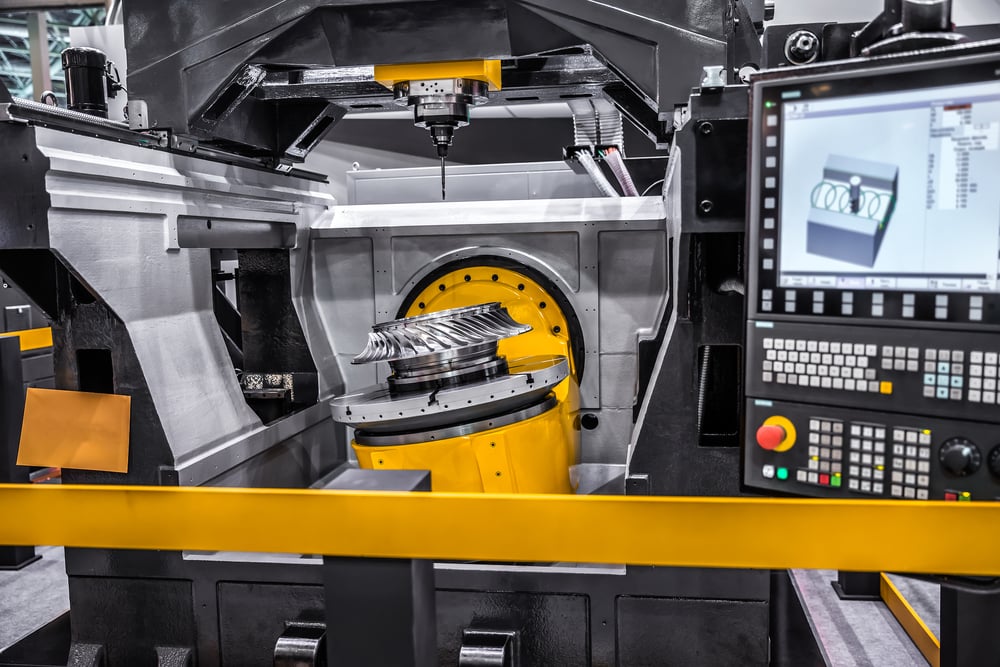
From toothpaste to jet engine components: Mexico is home to more than 380 aerospace companies across 19 states, exporting over $11 billion in aerospace products in 2024. The country is the 4th-largest aerospace exporter globally. To be clear, Mexico does not assemble complete aircraft. What it does is manufacture critical components, sub-assemblies, and perform MRO (maintenance, repair, and overhaul) work for programs including the Boeing 787 Dreamliner, Airbus A320 family, and the Safran LEAP engine that powers most new narrowbody commercial aircraft. Safran, GE Aerospace, Honeywell, Collins Aerospace, Parker Hannifin, Ducommun, BAE Systems, and Bombardier all operate here.
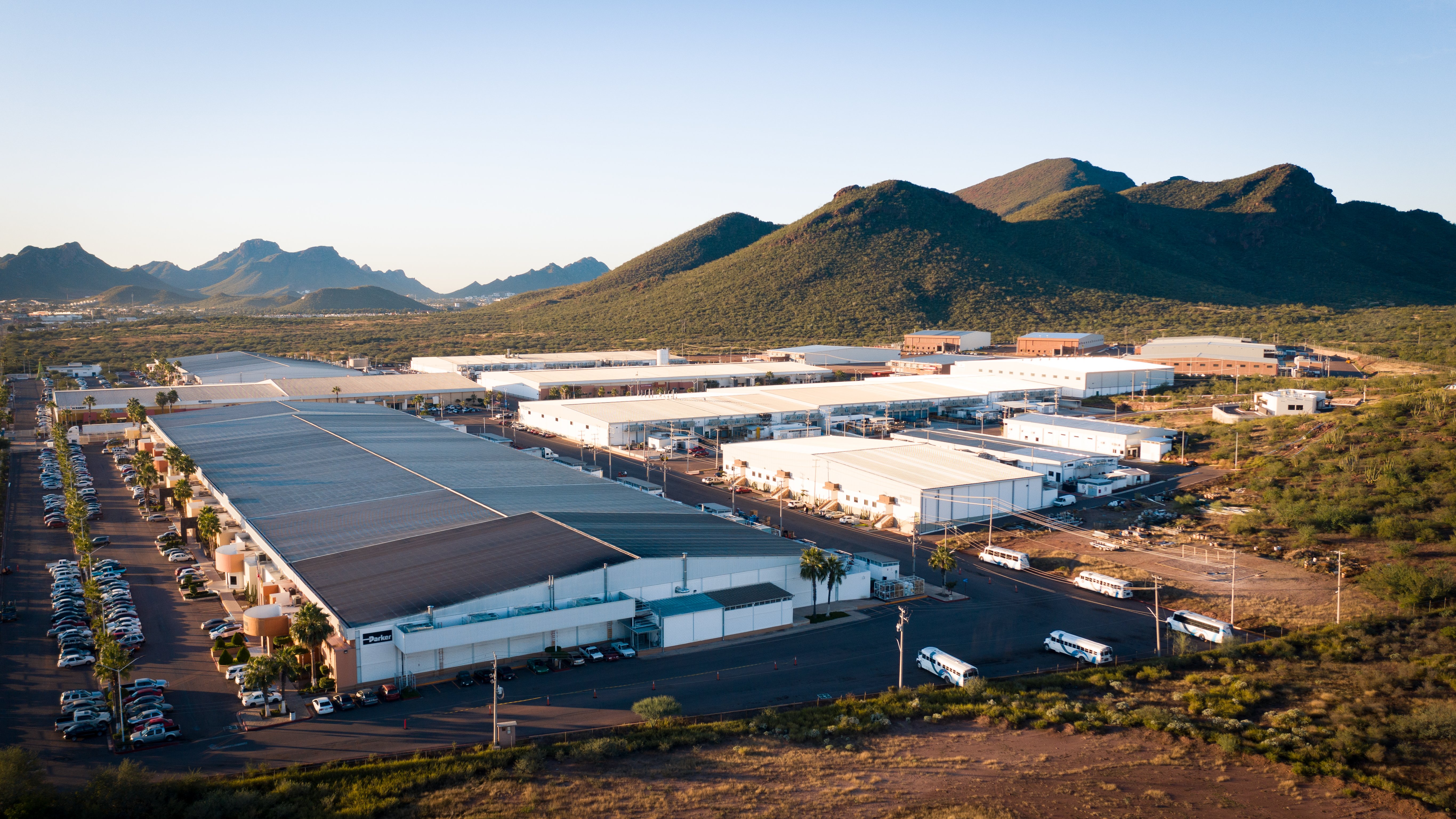
The sector is geographically distributed. Querétaro is the largest cluster. Guaymas, Sonora has become one of Mexico's most specialized aerospace zones, concentrated around turbine component machining and precision castings. Consolidated Precision Products (CPP) operates a 120,000-square-foot campus in Guaymas and recently expanded to Mazatlán to add post-cast processing capacity. GE Aerospace invested 550 million pesos upgrading engine overhaul facilities in Hermosillo and Saltillo. Baja California adds more than 110 firms and 35,000 workers. Across all of them, AS9100 certification, NADCAP accreditation, ITAR compliance, and FAA oversight are table stakes. For a closer look, see aerospace manufacturing in Mexico.
3. Fender Stratocaster Guitars
The Fender Stratocaster, one of the most recognizable instruments in music history, is manufactured in Ensenada, Baja California. Fender's Mexican plant produces the Player Series, which accounts for a significant share of the company's global output. What guitarists once called "MIM" (Made in Mexico) instruments are now widely regarded as some of the best value-for-quality guitars available anywhere.
Fender's Ensenada facility handles precision CNC machining, woodworking, paint finishing, electronics assembly, and final quality inspection under one roof. It's a useful reminder that Mexico's manufacturing strengths extend into skilled craftsmanship and products where brand reputation depends entirely on consistent quality.
4. Medical Devices
Mexico ranks 6th globally in medical device exports, shipping $19.3 billion worth of products in 2024. More than 250 companies manufacture medical devices in the country, and the sector employs over 160,000 workers. Products range from disposable syringes and catheters to Class III implantable cardiac devices, diagnostic imaging equipment, and surgical robotics components.
Becton Dickinson, Abbott Laboratories, Medtronic, Boston Scientific, Cardinal Health, and Medline all operate here. Abbott inaugurated a new $200 million electrophysiology plant in Querétaro in January 2026. Medline announced plans to invest $250 million in a new facility in Nuevo Laredo. The Tijuana-Mexicali corridor in Baja California is the largest medtech manufacturing zone, with hundreds of device makers concentrated along the border. Sonora has emerged as a growing hub: Medtronic and TE Connectivity both manufacture in Empalme (arterial implants, suture needles, and imaging cables respectively), Nordson Medical produces high-performance medical tubing in Guaymas, and Becton Dickinson operates an infusion set facility in Hermosillo. Querétaro anchors the Bajío region, led by Abbott.
Medical device manufacturing operates under FDA 21 CFR Part 820, ISO 13485, and COFEPRIS registration. These are among the most demanding quality environments in global manufacturing. The fact that the world's leading medtech companies produce Class III devices in Mexico should answer any question about whether the country can handle complex, regulated production. For more on this sector, see medical device manufacturing in Mexico.
380+
Aerospace Companies
$19.3B
Medical Device Exports
5th
Largest Vehicle Producer
6th
Largest Furniture Exporter
5. Furniture and Home Goods
Most people associate furniture manufacturing with China or Vietnam. Mexico is actually the 6th-largest furniture exporter in the world, shipping approximately $1.6 billion in home furnishings to the U.S. and Canada annually. La-Z-Boy manufactures in Mexico. Richter Design produces furniture for Williams Sonoma Home, Pottery Barn, Z Gallerie, and Restoration Hardware from Mexican facilities. Dozens of other companies produce office furniture, cabinetry, mattresses, and home décor components across states like Jalisco, Nuevo León, and the State of Mexico.
Furniture manufacturing involves woodworking, metal frame fabrication, upholstery, foam processing, finishing, and assembly, often in the same facility. The sector has been growing as companies shift sourcing from Asia to shorten delivery times and reduce freight costs. A container from Mexico reaches the U.S. in days, not weeks.
6. Home Appliances
Mexico is one of the world's largest appliance manufacturing hubs. LG Electronics operates major production facilities in Monterrey. Whirlpool, Electrolux, Samsung, Mabe, and Fisher & Paykel (owned by Haier) all manufacture refrigerators, dishwashers, washing machines, ovens, and cooktops here. Mabe, headquartered in Mexico, once designed and manufactured 95% of General Electric's gas ranges and refrigerators sold in the United States.
Appliance production involves complex supply chains with hundreds of components, tight tolerances on metal forming, and rigorous UL, CSA, and NOM safety certifications. Mexico's appliance ecosystem, including deep supplier networks for sheet metal, injection molding, compressors, and electrical components, has been built over decades of sustained investment. For a closer look at this sector, see our guide to appliance manufacturing in Mexico.
7. Tools and Industrial Equipment
Many of the tools professionals and homeowners rely on every day are manufactured in Mexico. Milwaukee Electric Tool Corporation invested $86 million in its facility in Torreón, Coahuila, producing power tools and accessories. Werner Company, the world's leading ladder manufacturer, operates out of Juárez, Chihuahua. Stanley Black & Decker and Emerson Electric also maintain significant Mexican operations.
Power tools and industrial equipment require precision metal stamping, injection molding, motor assembly, and durability testing. Brands like Milwaukee and Werner stake their reputations on Mexican-made products, which says something meaningful about the quality and skill available in the country's manufacturing workforce.
8. Automobiles
Mexico surpassed Germany in 2024 to become the world's 5th-largest vehicle producer, building 3.95 million vehicles in 2025. BMW, Audi, Toyota, Nissan, General Motors, Ford, Stellantis, Honda, Kia, and Mazda all operate assembly plants in Mexico.
What makes this even more significant is the Tier 1 and Tier 2 supplier ecosystem underneath those OEMs. Thousands of companies manufacture wiring harnesses, brake systems, stamped body panels, and powertrain components. The automotive sector represents the most demanding manufacturing environment in terms of quality standards (IATF 16949), just-in-time logistics, and cost discipline, and Mexico meets those standards across thousands of facilities. For more on this sector, see which car brands are made in Mexico and Tetakawi's automotive manufacturing overview.
9. Electronics
Mexico is the world's 6th-largest electronics exporter, with the sector generating over $107 billion in export value in 2024. Samsung, LG, Sony, Sharp, Foxconn, and Vizio manufacture televisions, monitors, and components in Mexican facilities. Tijuana and Juárez are the primary electronics corridors, while Guadalajara serves as Mexico's technology hub for higher-value design and engineering.
Samsung operates a Center for Digital Research and Technological Development in Mexico, a signal that the country's electronics sector has moved beyond assembly into product development. Electronics manufacturing requires cleanroom environments, ESD-protected assembly lines, surface-mount technology, and integration with global component supply chains, all of which Mexico has built over decades of investment. For more on this sector, see Tetakawi's electronics manufacturing overview.
10. Semiconductors and AI Hardware
This one is the most forward-looking. Foxconn is building its largest production facility in Mexico, located in Tonalá, Jalisco, to assemble Nvidia's GB200 chips, the processors powering the current generation of AI infrastructure. Mexico's semiconductor market reached $10.4 billion in 2024 and is projected to grow to $18.4 billion by 2033.
Qualcomm and Foxconn already operate chip assembly facilities in the country. In January 2025, Mexico's government introduced incentives specifically targeting semiconductor nearshoring through its Plan México initiative, and the Kutsari project is building design hubs, fast-tracking patents, and reducing import dependency. Chihuahua, Jalisco, and Nuevo León have become focal points, with over 20 semiconductor-related foreign investments announced or expanded in these regions in 2024 alone.
A country that assembles AI chips is not a country you can dismiss as a low-cost labor play. This is advanced manufacturing.
And the List Goes On
Ten items barely scratches the surface. Mexico's plastics industry includes over 5,000 companies exporting $13 billion annually. The textile and apparel sector employs 640,000 workers and ships $7 billion in exports per year. Mexico is a major producer of toys, sporting goods, packaging materials, processed foods, beverages (Mexico accounts for roughly 84% of all beer imported into the United States), candy and confections (Hershey's operates multiple plants in Jalisco and Nuevo León), and industrial chemicals.
For a sector-by-sector overview of Mexico's industrial landscape, see our guide to Mexico's top manufacturing industries.
Nothing Too Simple. Nothing Too Complex.
The 10 products above span an enormous range: from a $3 tube of toothpaste to precision turbine blades inside a jet engine. From hand-finished guitars to Class III cardiac implants. From flat-pack furniture to AI processor modules. Mexico's manufacturing ecosystem doesn't just do one thing well. It operates across the full complexity spectrum.
If you've been asked to evaluate whether Mexico makes sense for your operation, the question worth asking is not whether Mexico can manufacture your product. It can. The more useful questions are about timeline, total landed cost, regulatory pathway, and the specific region that best fits your supply chain. Mexico has free trade agreements with over 50 countries, established regulatory frameworks across virtually every industry, and a manufacturing workforce that graduates over 130,000 engineers annually.
Most manufacturers entering Mexico for the first time use a shelter services model. A shelter company handles the operational complexity — legal entity formation, tax registration, IMMEX certification, customs compliance, labor administration, and facility setup — so the manufacturer can focus entirely on production, quality, and IP. You bring the process; the shelter handles the country. It's how many of the companies on this list got started in Mexico, and it's typically the fastest path from decision to first production (4 to 6 months).
The fastest way to go from "could this work?" to a concrete answer is to understand how the process works. Our 10-step playbook for setting up manufacturing in Mexico walks through each phase from strategic planning through first production.
Ready to Explore What's Possible?
Over more than 40 years, Tetakawi has helped hundreds of manufacturers launch and operate in Mexico through its shelter services model — across aerospace, automotive, medical devices, electronics, consumer goods, and more. Today, the company supports 60+ active manufacturers. Whether you're exploring the idea for the first time or ready to move forward, a conversation with our team is the fastest way to get answers specific to your operation.
Talk to TetakawiGuide
How Shelter Services Help Manufacturers Launch in Mexico
Understand how the shelter model works and why most first-time manufacturers use it.
Read the guide →
White Paper
Solving the Manufacturing Labor Shortage
How Mexico's workforce pipeline addresses the skilled labor gap U.S. manufacturers face.
Download the white paper →
Frequently Asked Questions
What are the most common products manufactured in Mexico?
Mexico manufactures products across virtually every industry. The largest categories by export value include automobiles and auto parts, electronics, medical devices, aerospace components, home appliances, furniture, personal care products, tools, plastics, and textiles. In 2025, manufacturing accounted for 91.6% of Mexico's record $664.8 billion in total exports.
Can Mexico handle complex or highly regulated manufacturing?
Yes. Mexico ranks 6th globally in medical device exports ($19.3 billion in 2024), including Class III implantable devices manufactured under FDA 21 CFR Part 820 and ISO 13485. The country's 380+ aerospace companies produce components and sub-assemblies for programs including the Boeing 787 Dreamliner and Safran LEAP engine under AS9100 and NADCAP accreditation. Foxconn is building an Nvidia AI chip assembly facility in Jalisco. These are among the most demanding manufacturing environments in the world.
How large is Mexico's manufacturing sector?
Manufacturing represents approximately 20% of Mexico's GDP and 91.6% of the country's total exports. Mexico exported $664.8 billion in goods in 2025, a 7.6% increase over 2024, and received $40.9 billion in foreign direct investment. Mexico is the United States' largest trading partner.
What trade advantages does manufacturing in Mexico offer?
Mexico has free trade agreements with over 50 countries, including USMCA access to the U.S. and Canadian markets. Products manufactured in Mexico can enter the U.S. duty-free if they meet rules of origin requirements. The IMMEX program allows duty-free temporary importation of raw materials used in export manufacturing. Geographic proximity to the U.S. enables just-in-time logistics that ocean-freight supply chains from Asia cannot match.
What industries are growing fastest in Mexico?
Non-automotive manufacturing grew 17.3% in 2025, making it the fastest-growing export segment. Aerospace manufacturing is projected to reach $8.88 billion in 2026, growing at a 6.94% CAGR. The semiconductor market reached $10.4 billion in 2024 and is projected to nearly double by 2033. Machinery and specialized equipment exports surged 28.7% in 2025.
How do manufacturers get started in Mexico?
Most manufacturers entering Mexico for the first time use a shelter services model, which allows them to begin production without establishing a Mexican legal entity. The shelter provider handles tax registration, customs compliance (including IMMEX certification), labor administration, and facility setup while the manufacturer retains full control over production, quality, and intellectual property. Over more than 40 years, Tetakawi has helped hundreds of manufacturers through this model and currently supports 60+ active operations across multiple industries. A typical timeline from decision to first production is 4 to 6 months.
Thinking about manufacturing in Mexico? Download this ebook and start moving your due diligence forward.

Subscribe
Sign up and stay informed with tips, updates, and best practices for manufacturing in Mexico.