Foreign manufacturers exploring Mexico have a fundamental decision to make early in the process: set up a standalone subsidiary or partner with a shelter service provider. The standalone route means your company handles everything directly, from IMMEX registration and facility sourcing to workforce management and customs compliance. Some large organizations with dedicated international operations teams take that path. Most manufacturers evaluating Mexico for the first time find the shelter model faster, lower-risk, and more cost-effective.
But "shelter company" is not a single category. As nearshoring has accelerated and more manufacturers weigh their options for entering the Mexican market, the term has come to cover a wide range of business models, from full operating environments to bare-bones administrative wrappers. Understanding the differences matters because the type of shelter partner you choose directly affects your launch timeline, operating costs, compliance risk, and long-term flexibility.
This guide draws on Tetakawi's experience supporting manufacturers across company sizes, industries, and operating models over the past four decades. It breaks down each shelter model so you can evaluate providers on an informed, apples-to-apples basis.
The Six Types of Shelter Companies in Mexico
These categories are not rigid. Some providers blend elements of multiple models, and a company's marketing may not always reflect which type it actually operates. The descriptions below focus on how each model functions in practice, not how it is positioned in a sales deck.
1. Manufacturing Campuses
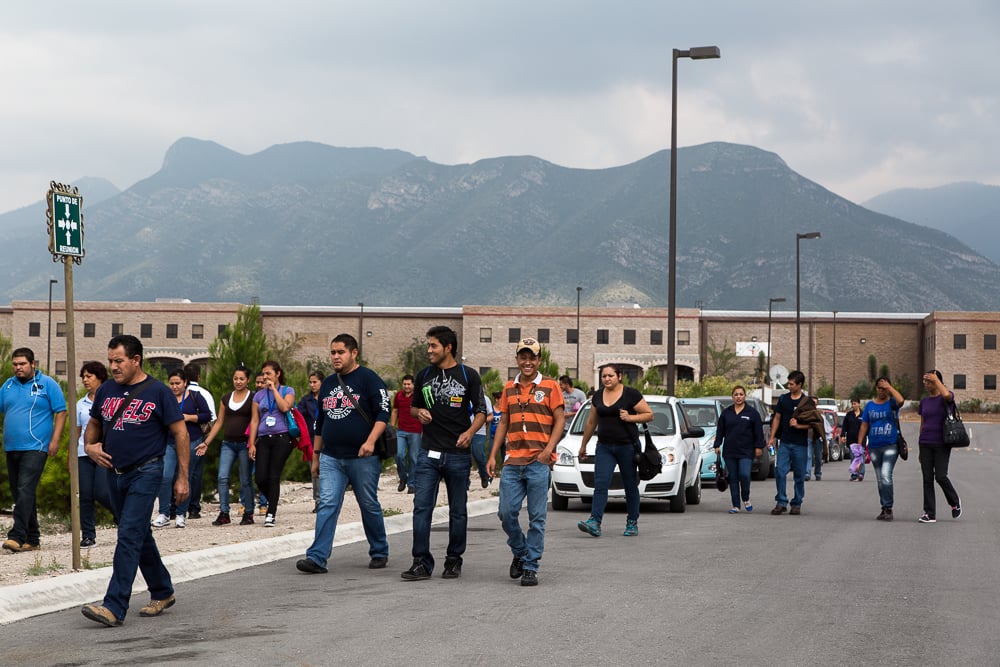
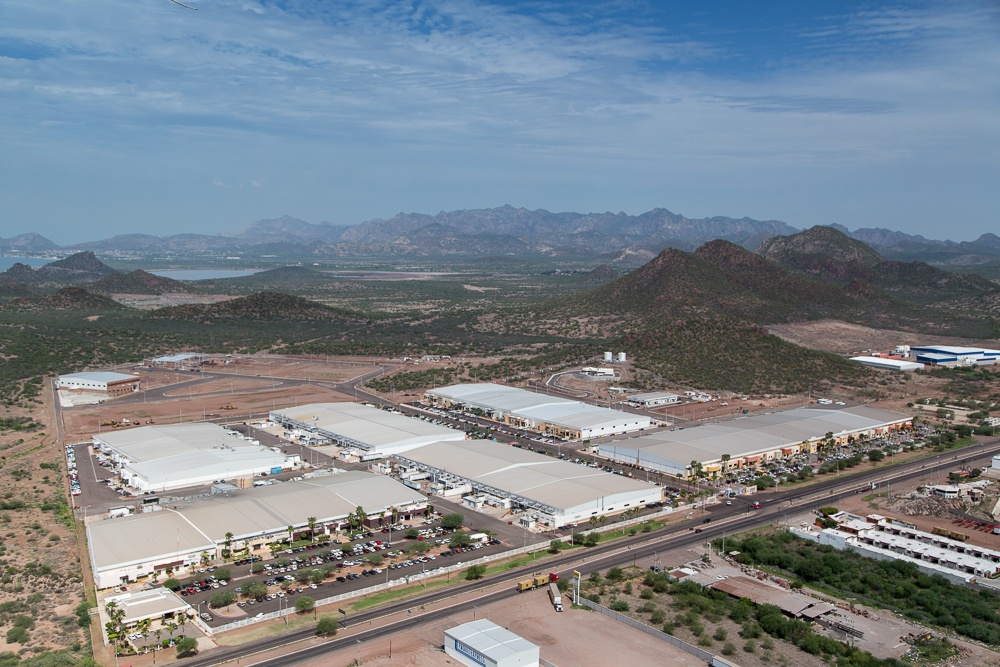
The manufacturing campus model represents the most integrated approach to shelter services. These providers own and operate industrial facilities, manage workforce ecosystems, run logistics and customs operations, and handle all compliance and administration under a single operational platform. The four pillars (industrial space, workforce, logistics, and compliance) function as an interconnected system rather than a collection of standalone services.
What distinguishes campus operators from other shelter types is infrastructure ownership combined with operational integration. The provider owns the buildings, employs the HR teams, runs the import/export desks, and manages the EHS programs directly. This eliminates the coordination overhead that comes with managing a landlord, a staffing agency, a customs broker, and an accounting firm as separate relationships. Shared infrastructure also creates economies of scale: centralized recruitment, coordinated compensation strategies, and shared transportation routes reduce costs across all tenants. In established campus environments, manufacturers can often recruit 10 or more operators per week and launch production within 30 to 60 days.
The model scales in both directions. Some manufacturers operating in campus environments have been there for decades, while others arrived within the last quarter. Individual operations range from lean teams of 20 to facilities with well over 1,000 employees. Because campus operators invest in the communities where they build, they tend to develop deeper workforce pipelines than other shelter types, which translates into lower turnover and stronger recruitment channels over time.
Best fit: Manufacturers that want a single operational partner and the fastest path from decision to production. Well suited to highly regulated industries like medical devices and aerospace, where plant management needs to focus on production and quality systems rather than local administration.
Key consideration: Campus providers operate in specific regions where they have built infrastructure. If your supply chain requires a location outside their footprint, this model may not apply.
2. Full-Service Shelter Companies
Full-service shelter providers deliver a broad range of administrative, compliance, and operational support similar to what campus operators offer. The scope of services (IMMEX licensing, HR management, payroll, customs, EHS, and accounting) is broadly comparable. The difference is in how those services connect to each other and to your physical facility.
Full-service shelters do not own real estate. They work with independent landlords to help you secure industrial space, then layer their operational services on top. This means you are managing at least two primary relationships: the shelter provider for compliance and administration, and the landlord for your building. In practice, you may also be coordinating with the landlord's maintenance team, a separate security company, and other facility service vendors.
The upside is geographic flexibility. Because full-service shelters are not tied to their own real estate, they can support operations across a wider range of cities and industrial parks. If your supply chain dictates a specific location, a full-service shelter may be able to accommodate it.
Best fit: Manufacturers that need shelter services in a location where campus infrastructure does not exist, or companies that already have a facility lined up and need operational support around it.
Key consideration: Without integrated real estate, your launch timeline depends on the landlord's readiness. Facility improvements, utility installations, and permit transfers can add weeks or months.
3. Start-Up Shelter Companies
Start-up shelters are designed as transitional arrangements. They provide the compliance, HR, and administrative infrastructure you need to begin manufacturing in Mexico, with the explicit understanding that you will eventually take over those functions and operate independently.
The business model works like this: the shelter handles your IMMEX permit, workforce management, and regulatory compliance during an initial period. Meanwhile, it helps you build the internal knowledge and infrastructure needed to run those functions yourself. At an agreed-upon point, the shelter steps aside and the manufacturer assumes full responsibility.
This model is most common among large multinational manufacturers that have the scale, budget, and internal resources to eventually operate a standalone subsidiary in Mexico. For these organizations, the shelter phase is a controlled on-ramp rather than a long-term operating structure.
Best fit: Large companies planning to establish a standalone entity in Mexico that want to begin production quickly while building out their own local capabilities.
Key consideration: The transition from shelter to standalone is complex. It involves obtaining your own IMMEX license, transferring employee relationships, renegotiating supplier contracts, and assuming direct liability for compliance. Plan for 6 to 12 months of transition activity, and budget for the overhead of running parallel systems during the handoff.
4. Contract Manufacturing with Shelter Services
Some contract manufacturers in Mexico also offer shelter-adjacent services. These companies primarily run production operations. They employ the production workers, manage the manufacturing process, and often take responsibility for quality control. The shelter component (typically IMMEX licensing and some administrative support) is secondary to their core business of making products.
This model differs fundamentally from other shelter types on one point: the manufacturer does not retain direct control of production. In a traditional shelter arrangement, the foreign company runs its own production line with its own processes and quality standards. With a contract manufacturer, production decisions are shared or delegated.
The appeal is simplicity. If you need products made in Mexico but do not want to manage a production floor, a contract manufacturer with shelter services handles both. The trade-off is control and IP exposure. Your manufacturing processes, quality standards, and production data are in someone else's hands.
Best fit: Companies that want products manufactured in Mexico without operating their own facility. Often used for overflow production, specialized processes, or market testing before committing to a dedicated operation.
Key consideration: Evaluate IP protections carefully. Understand who owns the tooling, who controls production data, and what happens to your processes if the relationship ends.
5. Real Estate Companies with Shelter Services
Some industrial real estate developers and landlords in Mexico have added shelter services to their offerings. Their core business is building, leasing, and managing industrial properties. The shelter component (often including IMMEX licensing, basic HR support, and compliance assistance) is a value-added service designed to attract tenants.
The depth of shelter services varies significantly across this category. Some real estate-focused providers have built capable administrative teams. Others outsource shelter functions to third-party providers operating within their buildings, which means you may be paying the real estate company a management fee on top of the third party's service costs.
This model can work well if the property itself is the primary draw: a specific industrial park offers the right location, spec, or proximity to your supply chain. Just be sure to evaluate the shelter services independently from the real estate offering.
Best fit: Manufacturers whose location requirements are highly specific and whose primary decision driver is the physical facility.
Key consideration: Ask whether the shelter services are delivered by the real estate company's own team or subcontracted. Third-party arrangements add a layer of coordination and can make it harder to resolve issues quickly.
6. A La Carte Shelter Providers
A la carte providers offer individual shelter services on a modular basis. Instead of a bundled package, manufacturers select only the functions they need: perhaps IMMEX licensing and customs support, but not HR or accounting. This pick-and-choose approach gives companies precise control over their service mix.
The model appeals to manufacturers that already have some Mexico operational capability and need to fill specific gaps. A company that runs its own HR but struggles with customs compliance, for example, might engage an a la carte provider solely for import/export management.
The risk is fragmentation. When shelter services are unbundled, the manufacturer becomes the integrator. You are responsible for making sure payroll data flows to the tax team, customs declarations align with production records, and EHS reporting meets federal requirements. In an integrated model, those handoffs happen inside a single organization. In an a la carte model, they happen across your desk.
Best fit: Experienced manufacturers with established Mexico operations that need targeted support in specific functional areas.
Key consideration: Modular services can become more expensive than a bundled package once you account for the internal coordination overhead and the cost of managing multiple vendor relationships.
How to Tell What Type of Shelter Company You Are Dealing With
Provider websites often blur the lines between these categories. A real estate company may describe itself as "full-service shelter." A start-up shelter may market itself as a "manufacturing campus." The language in the market is inconsistent, which is why due diligence matters more than marketing.
Six questions that reveal which model a provider actually operates:
| Question | What the Answer Reveals |
|---|---|
| Do you own the buildings your clients operate in? | Yes = campus or real estate model. No = full-service, start-up, or a la carte. |
| Will we operate under your IMMEX license or obtain our own? | Shared license = most shelter types. Separate license = start-up model (preparing you for independence). |
| Do you deliver all services with your own team, or do you subcontract? | Own team = campus or full-service. Subcontracted = real estate model or a la carte. |
| Is the expectation that we will eventually operate independently? | Yes = start-up shelter. No = long-term shelter (campus, full-service, or real estate). |
| Do you manage our production process? | Yes = contract manufacturer. No = shelter provider (you control production). |
| Can we select only certain services? | Yes = a la carte. No = bundled model (campus, full-service, or start-up). |
| Will we operate under a shared entity or a dedicated one? | Shared (multi-tenant) = provider has skin in the game as employer of record. Dedicated entity = more administrative independence, but the provider's risk exposure is limited to advisory. |
The answers to these questions will tell you more about a provider's actual operating model than any brochure. If you are comparing multiple providers, use the same question set for each one and document the responses side by side.
Questions to Ask a Shelter Company Before Signing
Beyond identifying the type of shelter, there are operational and financial questions that separate strong providers from weak ones. These apply regardless of which model you are evaluating.
On licensing and legal structure: Does the manufacturer enter under the shelter's business license, or does the shelter obtain a separate license for each client? This has significant implications for permanent establishment exposure, tax treatment, and what happens if you decide to exit.
On costs and transparency: What is included in the shelter fee versus billed separately? Request a complete breakdown. Some providers quote low shelter fees but charge separately for customs processing, EHS reporting, payroll administration, and facility maintenance. The all-in cost is what matters.
On facility costs: If the provider leases space, who bears responsibility for real estate taxes, building insurance, maintenance, and improvements? Will you pay for tenant improvements up front, and if so, what happens to that investment if you leave?
On workforce: How does the provider handle recruitment, retention, and turnover? What is the average turnover rate across their client base? Do they manage transportation, benefits, and compensation benchmarking? Labor is typically the largest cost driver in Mexico manufacturing, so the workforce strategy deserves detailed scrutiny.
On compliance: Mexico's regulatory environment has become significantly more demanding. SAT audit activity targeting foreign trade taxpayers is increasing, IMMEX-specific compliance obligations have expanded, and penalties for non-compliance have grown steeper. Ask what compliance systems the provider uses, how they stay current with regulatory changes, and what their audit process looks like. If the provider operates a dedicated entity model, ask who employs the compliance team (you or them) and request references from existing clients who can speak to how their compliance costs have changed over the past several years. This is an area where the difference between shared and dedicated structures has real financial implications.
On exit terms: What does the transition look like if you outgrow the shelter or want to move to a standalone structure? Are there early termination penalties? How are employee transitions handled? The best time to negotiate exit terms is before you sign, not when you are trying to leave.
Choosing the Right Shelter Model for Your Operation
The right shelter type depends on your company's specific situation. There is no universally best model. The U.S.-Mexico-Canada Agreement (USMCA) has accelerated nearshoring activity, bringing more manufacturers into Mexico and increasing the variety of shelter options available. Consider the following when evaluating your choices.
Speed to production: If launch timeline is the primary driver, manufacturing campus providers typically offer the fastest path because the infrastructure already exists. Full-service shelters depend on landlord readiness. Start-up shelters prioritize transition planning over speed.
Long-term operating plan: If your company intends to operate in Mexico indefinitely under a shelter structure, campus or full-service models are designed for that. If the goal is to eventually run independently, start-up shelters are purpose-built for the transition.
Level of control: Every shelter model except contract manufacturing lets you retain full control of production, quality, and IP. The differences are in how much operational infrastructure surrounds your production floor. Campus models provide the most support. A la carte provides the least.
Budget: Bundled models (campus, full-service) spread overhead across their client base, which typically reduces per-manufacturer costs. A la carte and independent setups may look cheaper on paper but often cost more once you account for internal coordination and vendor management.
Multi-Tenant Shelter vs. Dedicated Entity
One structural question that comes up in shelter evaluations is whether to operate under a multi-tenant arrangement or a dedicated legal entity.
In a multi-tenant shelter, multiple manufacturers operate under the provider's shared IMMEX license and legal structure. The provider manages compliance, IMMEX reporting, and government relationships across all tenants, and it serves as the employer of record, importer of record, and in many cases the manufacturer of record. That is worth understanding because it means the provider's own business is directly tied to compliance outcomes. If something goes wrong with customs, labor, or tax authorities, the provider is on the hook alongside its clients. Compliance costs are distributed across the tenant base, and the teams doing that work sit on the provider's payroll as part of the shared infrastructure.
In a dedicated entity arrangement, the provider creates a separate Mexican legal entity for a single client. This gives the manufacturer more direct control over the legal structure and can be the right choice for companies that want to build internal expertise in Mexican labor law, union relations, tax compliance, and regulatory affairs. Some organizations genuinely need that level of involvement. It is worth noting, though, that the dedicated model also changes the incentive structure. Because your entity is firewalled from the provider's other operations, the provider's exposure is limited. It can advise on compliance, but the legal and financial consequences of a labor dispute, a SAT audit, or a customs issue land on your entity, not theirs. The compliance staff working on your account may also sit on your payroll rather than the provider's, which means you are paying their salaries and paying the shelter a management fee on top. That cost structure matters more now than it did a few years ago. Mexico's SAT has expanded its audit focus on foreign trade taxpayers for 2026, and recent amendments to the customs law and federal tax code have added new compliance obligations for IMMEX companies specifically. In a dedicated structure, you bear the full weight of those changes rather than sharing them across a tenant base.
For most manufacturers entering Mexico, particularly those focused on production rather than building a local regulatory practice, the multi-tenant model is more practical. The provider has real skin in the game as your risk-sharing partner, and the cost structure reflects shared infrastructure rather than duplicated overhead. The dedicated entity option tends to make more sense once operations are mature and the company has a specific strategic reason to take on that responsibility directly.
Mexico's advanced manufacturing sector continues to attract investment across automotive, aerospace, medical devices, and electronics. Choosing the right shelter model, and the right legal structure within it, is one of the most consequential decisions you will make when entering this market.
For a deeper comparison of shelter services against standalone operations, see our guide to shelter vs. standalone manufacturing in Mexico. If you are in the early stages of evaluating shelter providers, the Buyer's Guide to Choosing a Shelter Service Provider in Mexico walks through the full evaluation process, including the questions above, benchmarking criteria, and a side-by-side comparison framework you can bring into provider meetings.
Frequently Asked Questions About Shelter Companies in Mexico
What is a shelter company in Mexico?
A shelter company is a Mexican legal entity that allows foreign manufacturers to operate in Mexico without forming their own subsidiary. The shelter holds the IMMEX permit, serves as the employer of record, and manages compliance obligations on behalf of the foreign manufacturer. The manufacturer retains full control of production, quality, and intellectual property while the shelter handles the regulatory and administrative infrastructure. There are six distinct types of shelter companies, ranging from fully integrated manufacturing campuses to modular a la carte providers.
How many shelter companies operate in Mexico?
There are approximately 25 to 30 shelter service providers operating in Mexico as of 2026. They vary significantly in size, scope, and operating model. Some support a single client in one location. Others support dozens of active manufacturers across multiple regions. The number of providers has grown as nearshoring has increased demand for Mexico manufacturing infrastructure, so evaluating them carefully matters more now than it did five years ago.
What is the difference between a manufacturing campus and a traditional shelter?
A traditional shelter provides administrative and compliance services, often working with third-party landlords, staffing agencies, and logistics firms. A manufacturing campus integrates all four operational pillars (industrial space, workforce management, logistics, and compliance) under a single operator. The campus model eliminates the coordination overhead of managing multiple vendors and typically delivers faster launch timelines: 30 to 60 days versus 6 to 12 months for standalone setups. The distinction matters because integrated operations tend to produce more predictable costs and fewer compliance gaps.
Can I switch from one type of shelter to another?
Yes, but transitions involve complexity. Moving from a start-up shelter to a standalone entity requires obtaining your own IMMEX license, transferring employee relationships, and assuming direct compliance responsibility. Switching between shelter providers (for example, from a full-service shelter to a manufacturing campus) involves negotiating exit terms with the current provider and onboarding with the new one. If you are considering adding capacity at a new location rather than moving your existing operation, a campus model can make sense for the new site even if your original facility operates under a different arrangement.
What is the difference between a multi-tenant shelter and a dedicated entity shelter?
In a multi-tenant shelter, multiple manufacturers operate under the provider's shared IMMEX license and legal structure. The provider serves as employer of record and risk-sharing partner, with its own business directly tied to compliance outcomes across all tenants. Compliance costs are shared and the teams doing that work are on the provider's payroll. In a dedicated entity arrangement, the shelter creates a separate legal entity for one client. The manufacturer gets more control but also absorbs more risk: the compliance team may sit on your payroll (with a shelter fee on top), and any regulatory issues land on your entity rather than the provider's. Most manufacturers entering Mexico for the first time find the multi-tenant model more practical because the provider has genuine skin in the game and the cost structure reflects shared infrastructure.
How much do shelter services in Mexico cost?
Shelter fees vary by provider type and service scope. Campus and full-service models typically charge a per-employee monthly fee that covers administration, compliance, and shared services. Some providers charge additional fees for customs processing, EHS, or facility management. A la carte providers price each service independently. The all-in cost depends on your headcount, location, and the complexity of your operation. For detailed cost benchmarks, see our cost of manufacturing in Mexico guide.
What should I look for when evaluating shelter companies?
Focus on five areas: track record and scale (how many manufacturers they support and for how long), service delivery model (own team versus subcontracted), facility ownership or access, financial transparency (all-in costs versus hidden fees), and exit flexibility. Ask every provider the same set of questions and compare responses side by side. Providers that are transparent about their model, pricing, and track record are generally more reliable partners. For a comprehensive evaluation framework, download the Buyer's Guide to Choosing a Shelter Service Provider.
Thinking about manufacturing in Mexico? Download this ebook to learn about the different types of shelter companies in Mexico.