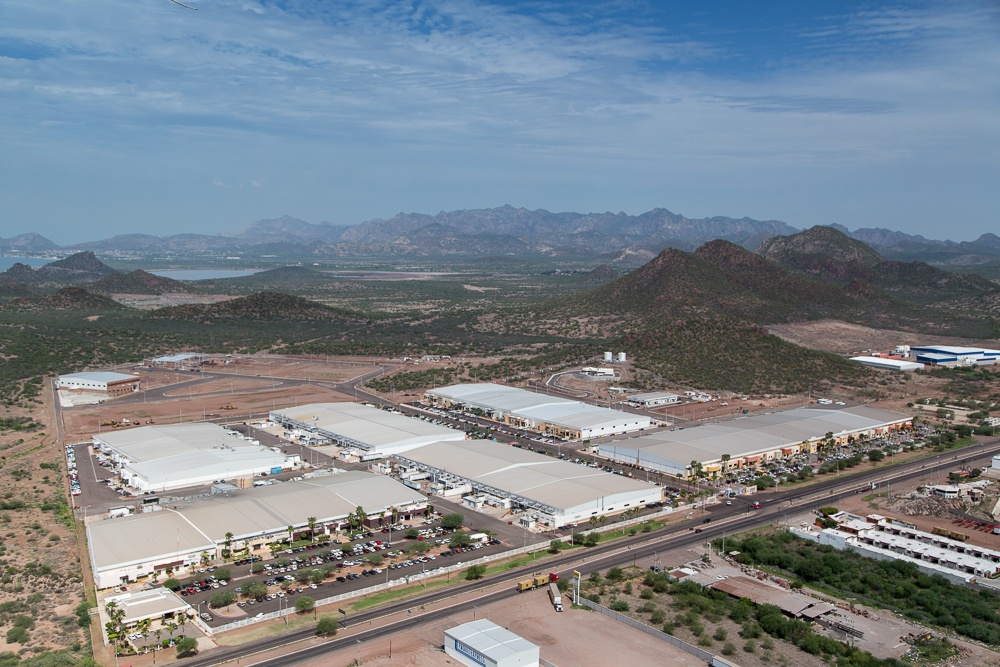
Someone in your organization just raised the Mexico question. Maybe a customer is pushing for regional supply. Maybe a competitor moved production south and your cost structure no longer holds. Maybe you cannot staff a second shift because the local labor market has dried up. Maybe tariffs are forcing a conversation your team has been putting off. Whatever the trigger, you need to understand what the process actually looks like before you commit resources or present a plan to leadership. Over 40+ years, Tetakawi has launched hundreds of manufacturers into Mexico, with 60+ operating across five campuses today. The 10-step sequence below is the same one those manufacturers followed. It is not a pitch. It is the operational reality of what this process involves, updated for 2026 market conditions.
Key Takeaway
Setting up manufacturing in Mexico follows a predictable 10-step sequence regardless of your industry or company size. The critical decision comes at Step 4: whether you incorporate as a standalone entity or operate under a Manufacturing Campus model. That single choice determines whether the process takes as little as 30 days or 8–12 months. When a manufacturer's building is move-in ready, workforce needs are standard production roles, and equipment is staged to ship, the campus model has executed this in as little as 30 days from signed contract. The standalone path, where you incorporate, certify, hire, and build from scratch, typically takes 8–12 months. Your production ramp timeline after move-in depends on your industry, product complexity, and customer requirements.
Define Your Strategic Objectives
Defining your strategic objectives means answering three questions before you evaluate a single location or legal structure. The trigger behind your Mexico evaluation shapes every downstream decision. A company expanding to serve a U.S. automotive OEM that requires USMCA-qualifying content has different site selection criteria, compliance requirements, and timeline pressures than a company optimizing labor costs for consumer electronics assembly.
Before evaluating locations or legal structures, define three things. First, what does success look like in 12 months? Second, what production volume and quality certifications does your customer or market require? Third, what is the acceptable timeline from decision to production?
These answers become the filter for every step that follows. Companies that skip this phase often select a city based on proximity to an existing supplier, only to discover that the labor market cannot support their headcount plan or that the logistics corridor adds unnecessary cost.
Build Your Cost Model
A credible Mexico cost model requires seven categories: direct labor (wages, benefits, statutory obligations including aguinaldo, PTU profit sharing, and IMSS social security contributions), indirect labor (supervision, quality, maintenance), facilities (lease, build-out, utilities, maintenance), logistics (inbound freight, customs brokerage, outbound freight, warehousing), regulatory compliance (IMMEX certification, environmental permits, safety standards), overhead (administration, IT, insurance), and import/export duties and taxes.
Direct Labor
Wages, benefits, IMSS, aguinaldo, PTU
Indirect Labor
Supervision, quality, maintenance
Facilities
Lease, build-out, utilities
Logistics
Freight, brokerage, warehousing
Regulatory
IMMEX, environmental, safety
Overhead
Admin, IT, insurance
Import/Export
Duties, taxes, USMCA costs
The common mistake is benchmarking only direct labor rates. Statutory employer contributions alone (IMSS, INFONAVIT, state payroll tax) add 35–45% above the base wage. Factor in aguinaldo, vacation premium, PTU profit sharing, and severance provisions, and the total burden can reach 50–80%. A manufacturer budgeting $3.50/hour for direct labor without accounting for these layers will underestimate true cost significantly.
One step manufacturers often skip at this stage: run a preliminary customs and tariff analysis before you finalize your cost model. Classify your raw materials, components, and finished goods by HTS code. Determine whether your product qualifies for USMCA preferential treatment based on rules of origin (regional value content, tariff shift, product-specific rules). If your product does not qualify, the duty exposure changes your cost model materially. This analysis belongs here, not after you have committed to a site.
Build your model against actual operating data, not published averages. Wage rates vary significantly by city and industry. A detailed cost breakdown for manufacturing in Mexico can help calibrate these figures against real operations.
Select Your Site
Site selection in Mexico means evaluating three variables simultaneously: labor market depth, logistics infrastructure, and supply base proximity.
Labor market depth is the most common blind spot. A city may have low wage rates and available industrial space, but if the local labor pool cannot support your headcount at your required skill level, retention problems will erase any cost advantage within the first year. Evaluate not just availability but competition for labor: how many manufacturers are already drawing from the same workforce?
Logistics infrastructure determines your cost structure. Proximity to the U.S. border matters for cross-dock operations, but inland cities with rail access and lower wage pressure can offset the additional transit time. Northern Mexico's industrial corridors (Saltillo-Monterrey, Hermosillo-Guaymas, Juárez-Chihuahua) each have distinct supply chain ecosystems shaped by the industries concentrated there. Evaluate port access, customs processing times, and supply base proximity for your specific indirect materials.
The Manufacturing Campus model changes this step significantly. When industrial space, workforce infrastructure, and logistics operations already exist at a location, your site selection decision becomes a campus evaluation rather than a city-by-city build-from-scratch analysis.
Choose Your Legal Structure
This is the fork in the road. The legal structure you choose determines your timeline, your risk profile, and the operational complexity of every step that follows.
Option A
Standalone Entity
You incorporate a Mexican subsidiary, apply for your own IMMEX certification, hire directly, sign your own lease, and manage all compliance.
8–12 months
Full ownership of the Mexican entity and all administrative operations.
Option B
Manufacturing Campus / Shelter
You operate under an established entity's IMMEX certification, legal framework, and operational infrastructure. Your team focuses on production, process, and quality.
As little as 30 days
With move-in-ready space and staged equipment. Production ramp timeline varies by operation.
The standalone path requires incorporating in Mexico, obtaining IMMEX certification through the Secretaría de Economía, and separately obtaining Certificación IVA (CIVA), a distinct certification that provides a tax credit on the 16% value-added tax so you do not pay it upfront on temporary imports. Without CIVA, your cash flow takes a significant hit while you wait for IVA reimbursement.
Most manufacturers producing for export operate under IMMEX. The program covers over 6,500 active establishments as of early 2026 and accounts for roughly 80% of Mexico's manufacturing exports. A complete guide to shelter services in Mexico covers how the campus/shelter model works operationally, including cost structures and provider evaluation criteria.
| Standalone Entity | Manufacturing Campus | |
|---|---|---|
| IMMEX & CIVA | Apply independently (3-6 months) | Operate under existing certification |
| Workforce | Recruit HR team, establish payroll | Existing recruitment pipeline |
| Facility | Find, lease, build out | Move-in ready industrial space |
| Compliance | Full burden (SAT, STPS, SEMARNAT) | Production-specific certs only |
How do you decide? The standalone path fits if you already have Mexico operational experience and want direct ownership of the entity, if your operation requires a purpose-built facility from the ground up, or if your long-term strategy includes multiple Mexican subsidiaries or acquisitions. The campus path fits if speed to production matters, if you want your team focused on manufacturing rather than Mexican regulatory administration, or if this is your first Mexico operation and you want to prove the model before committing to full incorporation. Manufacturers across industries — including automotive, aerospace, medical devices, electronics, and consumer goods — operate successfully under both models. Many start on a campus and transition to standalone once production is stable and they have built internal Mexico expertise. A detailed comparison of shelter vs. standalone operations breaks down the strategic trade-offs beyond what this overview covers.
Build Your Workforce
Mexico's manufacturing labor market employs over 3 million workers under IMMEX alone. Recruiting, hiring, and retaining a production workforce requires understanding three layers: statutory requirements, market conditions, and operational culture.
Statutory requirements include formal employment contracts (individual or collective), registration with IMSS (social security), compliance with Mexico's Federal Labor Law on working hours, overtime, and termination, and union relations where applicable. Mexico's 2019 labor reform changed how unions organize and how collective bargaining agreements are ratified. Your HR structure must account for this.
Market conditions vary by city. A guide to Mexico's manufacturing labor market covers availability, wage benchmarks, and retention strategies across different regions. Turnover rates in border cities can exceed 8-10% monthly for production operators, while interior cities often run 3-5%. This difference alone can shift your cost model by hundreds of thousands of dollars annually.
8–10%
Monthly turnover
Border cities
3–5%
Monthly turnover
Interior cities
Source: Tetakawi operational data across 60+ manufacturing operations
Operational culture is what separates manufacturers who retain talent from those who cycle through constant rehiring. Training programs, clear advancement paths, competitive benefits beyond the statutory minimum, and safe working conditions are not optional extras. They are the operating system for workforce stability.
Related resource
The labor market is the #1 variable in a Mexico cost model. This guide covers wage benchmarks, retention strategies, and availability data across regions.
Secure Your Facility
Facility decisions in Mexico follow one of three paths: build-to-suit (12-18 months), existing industrial space with tenant improvements (3-6 months), or move-in-ready space within an established campus (as little as 30 days).
Build-to-suit gives you full control over layout and specifications, but it carries construction risk, permitting delays, and the longest timeline. Existing industrial space in a standard industrial park requires you to coordinate tenant improvements, utility connections, and compliance certifications independently.
The third path, campus-based space, comes with infrastructure already in place: electrical capacity matched to manufacturing loads, water treatment, waste management, fire suppression, and security. Tenant improvements focus on production-specific layout rather than base building systems.
Regardless of path, evaluate these five factors before signing: electrical capacity and reliability (Mexico’s CFE rates and utility costs vary by region), water supply and wastewater treatment, structural load capacity for your equipment, expansion flexibility (can you add 30-50% capacity without relocating?), and proximity to your workforce (commute times directly affect attendance and retention).
Achieve Regulatory Compliance
Mexico's regulatory environment for manufacturers spans five domains: fiscal (SAT tax authority), labor (STPS workplace standards), customs (IMMEX and trade compliance), environmental (SEMARNAT, CONAGUA, NOM standards), and occupational health and safety (NOM-035 psychosocial risk, NOM-030 safety committees).
IMMEX certification, covered in Step 4, is the foundation. But IMMEX handles only the customs and import/export framework. Beyond IMMEX, you need:
- CIVA certification
- For the IVA tax credit on temporary imports (separate application, separate audit requirements)
- Environmental permits
- Environmental impact assessment and operating permits from SEMARNAT; wastewater discharge permits from CONAGUA if applicable
- Industry-specific certifications
- COFEPRIS for medical devices and pharmaceuticals, SEDENA for controlled substances, SCT for transportation equipment
- Municipal licenses
- Operating licenses and land use permits from local government
The compliance timeline varies by industry and location. Medical device manufacturers face COFEPRIS review cycles that can add 3-6 months. Aerospace companies pursuing NADCAP or AS9100 certification bring their own timelines independent of Mexican regulatory requirements.
One certification worth evaluating once operations are running: OEA (Operador Económico Autorizado), Mexico’s trusted trader program and the equivalent of C-TPAT in the United States. OEA certification streamlines customs processing, reduces inspection frequency, and signals supply chain security to your customers. It is not a launch requirement, but manufacturers with significant cross-border volume often pursue it within the first year of operation.
Under the Manufacturing Campus model, the regulatory infrastructure for base operations (IMMEX, fiscal compliance, labor law, environmental permits for the campus) already exists. Your compliance effort focuses on production-specific certifications rather than building the administrative foundation from scratch.
Align Your Supply Chain
Supply chain alignment for Mexico manufacturing means solving three problems: getting materials in, managing inventory, and getting finished goods out.
Getting materials in. Most manufacturers importing under IMMEX bring raw materials and components from the U.S., Asia, or Europe. Your customs broker and freight forwarder must understand IMMEX temporary import rules, HTS classification for your specific materials, and the documentation required to avoid delays at the border. A misclassified HTS code can trigger duties you did not budget for or hold your shipment at customs for days.
Managing inventory. IMMEX temporary import authorizations carry time limits (typically 18 months for raw materials, 36 months for equipment). Your inventory management system must track temporary import status, ensure materials are either exported as finished goods or returned within the authorized window, and generate the compliance documentation that SAT auditors will request.
Getting finished goods out. If your products are destined for the U.S. or Canada, USMCA rules of origin determine whether they qualify for preferential tariff treatment. Qualification depends on regional value content, tariff shift rules, and product-specific requirements that vary by HTS chapter. Building compliance into the production process, where trade specialists work alongside production teams from day one, produces strong qualification outcomes. Bolting compliance on after the fact creates rework and audit exposure.
For current USMCA rules of origin and qualification guidance, the Office of the U.S. Trade Representative maintains the full text and product-specific requirements.
Transfer Technology and Processes
Transferring technology and processes to Mexico covers four workstreams: equipment installation, process validation, quality system deployment, and workforce training on your specific production methods. This is where your manufacturing expertise meets the Mexico operation.
Start with your quality management system. Whether you operate under ISO 9001, IATF 16949 (automotive), ISO 13485 (medical devices), or AS9100 (aerospace), your Mexican operation must achieve the same certification level as your home facility. Plan for the certification timeline: initial audits typically require 6-12 months of documented operation.
Equipment transfer requires careful planning around temporary import classifications. Production equipment imported under IMMEX has a 36-month temporary import window (extendable). Ensure your equipment list, serial numbers, and valuations are documented before shipment. Any discrepancy triggers customs complications.
Process validation follows your industry's protocols: IQ/OQ/PQ for medical devices, PPAP for automotive, FAI for aerospace. Build your validation timeline backward from your customer's required delivery date.
The knowledge transfer methodology matters as much as the technical transfer. Identify your process experts, plan their time on-site in Mexico during launch (typically 4-8 weeks for complex manufacturing), and build local capability through structured training rather than permanent reliance on home-plant personnel.
Launch Production
Launching production in Mexico means all nine previous steps converge into a single operational moment. Equipment is installed and validated. Your workforce is hired, trained, and certified on your processes. Raw materials are in inventory. Quality systems are documented and ready for customer audit.
The launch sequence typically follows this order: equipment commissioning and test runs, first article production, quality verification against customer specifications, customer approval (first article inspection or PPAP submission), and ramp to target production volume.
Two factors determine how smoothly this goes. First, how well Steps 1–9 were executed. Companies that rushed site selection or workforce hiring to meet an aggressive timeline often spend the first 90 days of production solving problems that should have been resolved during setup. Second, the support infrastructure around production. Maintenance response times, spare parts availability, utility reliability, and logistics execution all affect whether your first 90 days are spent optimizing output or firefighting.
A note on what “as little as 30 days” actually means. The 30-day figure is contract-to-operational: the manufacturer signs, moves into an existing campus facility, and begins operations. That assumes move-in-ready space, a manageable workforce ramp, and equipment staged to ship. How quickly you move from operational to full production depends entirely on your operation: your equipment installation, process validation, workforce training, and whatever customer qualification your industry requires. Every manufacturer is different.
What This Means for Manufacturers
The 10 steps above are the same regardless of your industry, your product, or your company size. The variable is how you execute them.
Path A
Sequential Execution (Standalone)
You handle each step independently, in order. Incorporate, certify, find a building, hire an HR team, recruit production workers, obtain permits, set up logistics. Each step depends on the previous one.
8–12 months
Full ownership of entity and administrative operations. Requires: legal counsel, HR, real estate, logistics, compliance, and a PM coordinating across two countries.
Path B
Integrated Execution (Campus)
Steps 3 through 6 are already built into the operating environment. You step into an existing campus with industrial space, workforce infrastructure, compliance framework, and logistics operations already functioning.
As little as 30 days to operational
Assumes move-in-ready space and staged equipment. Production ramp timeline varies by operation.
The structural difference is not just speed. The campus model reduces the number of unknowns. When the facility, the labor pipeline, the compliance infrastructure, and the logistics network are already proven across 60+ manufacturers, you are not the first company to test whether the electrical grid can handle your load or whether the local labor market can support your headcount. That operational proof is built into the model.
The standalone path has its own advantages. If your operation requires a purpose-built facility, if you already have Mexico experience and want direct entity ownership, or if your long-term plan includes multiple subsidiaries or acquisitions in Mexico, the standalone path builds exactly that. Under either model, you retain full control of your production processes, intellectual property, and product quality. The difference is who manages the administrative and regulatory environment around your operation.
To evaluate how the Manufacturing Campus approach applies to your specific operation, Tetakawi’s manufacturing in Mexico overview covers entry models, locations, and the infrastructure that makes it work.
The Bottom Line
The process for setting up manufacturing in Mexico is well established. Over 6,500 active IMMEX-certified operations prove the model works. Mexico attracted $40.9 billion in foreign direct investment in 2025, with 37% directed to the manufacturing sector.
The question is not whether manufacturing in Mexico works. The question is which execution path matches your timeline, risk tolerance, and internal capacity.
If you have 12 months, a Mexico-experienced legal team, and dedicated project management resources, the standalone path gives you full ownership of the entity and its administrative infrastructure. If your customer, your board, or your competitive position demands faster execution, the Manufacturing Campus model compresses the critical path by integrating the infrastructure steps that typically consume 6–9 months of a standalone launch. Many manufacturers start on a campus and transition to independent operations once production is stable.
2026 adds urgency to this decision. The USMCA joint review is underway, and manufacturers with qualifying production in Mexico hold a structural advantage. Tariff uncertainty between the U.S. and China continues to accelerate nearshoring timelines. And Mexico's manufacturing workforce, at 3 million+ under IMMEX, is the deepest in Latin America.
The framework above is the same sequence that has launched hundreds of manufacturers over four decades. The steps do not change. The path you choose through them does.
For a complete overview of manufacturing in Mexico, covering cost analysis, industry data, and regulatory details beyond the scope of this playbook, the full guide goes deeper on each of these topics.
Ready to evaluate manufacturing in Mexico for your operation?
Talk with our team. We will help you build a cost model, evaluate sites, and determine the right execution path for your timeline.
Talk to Our TeamFrequently Asked Questions
How long does it take to set up manufacturing in Mexico?
The timeline depends on your legal structure. Operating under a Manufacturing Campus or shelter model, manufacturers can be operational in as little as 30 days because the facility, compliance framework, and workforce infrastructure already exist. Incorporating as a standalone entity, with independent IMMEX certification, hiring, and facility build-out, typically requires 8-12 months before production begins.
What is the first step to manufacturing in Mexico?
Define your strategic objectives before evaluating locations or providers. Identify which of the common triggers driving your decision (customer demand, cost reduction, labor availability, market access, or trade compliance), define your 12-month success criteria, and establish your timeline constraints. These answers shape every downstream decision from site selection to legal structure.
Do I need a Mexican entity to manufacture in Mexico?
Not necessarily. The shelter/Manufacturing Campus model allows foreign manufacturers to operate under an existing entity's IMMEX certification and legal framework without incorporating a Mexican subsidiary. Your company maintains full control of production, quality, and intellectual property while the campus operator manages the administrative and regulatory environment. Standalone incorporation is an option but adds 6-9 months and significant administrative complexity.
What permits and certifications are needed to manufacture in Mexico?
At minimum: IMMEX certification (for duty-free temporary imports of raw materials and equipment) and CIVA certification (a separate certification providing a tax credit on the 16% IVA value-added tax). Beyond these, manufacturers typically need environmental operating permits from SEMARNAT, municipal business licenses, and industry-specific certifications. Medical devices require COFEPRIS registration. Aerospace operations often require NADCAP accreditation. Automotive suppliers need IATF 16949 compliance.
How much does it cost to set up a factory in Mexico?
Costs vary significantly by industry, scale, and location. The seven cost categories to model: direct labor, indirect labor, facilities, logistics, regulatory compliance, overhead, and import/export duties. Direct labor savings of up to 60% versus U.S. fully burdened rates are common, but the total cost model must account for Mexico-specific statutory benefits (IMSS, INFONAVIT, aguinaldo, PTU) that add 35-45% above base wages. A complete cost guide breaks down each category with current benchmarks.
What is the difference between shelter manufacturing and standalone operations in Mexico?
Shelter or Manufacturing Campus operations allow you to produce under an established entity’s permits, certifications, and legal structure while the operator manages compliance, HR administration, and regulatory affairs. Standalone operations require full Mexican incorporation, independent IMMEX and CIVA certification, direct hiring, and managing all regulatory obligations. The key differences are timeline (as little as 30 days vs. 8–12 months), administrative burden, and risk exposure. The standalone path gives you full ownership of the entity long-term.
Thinking about manufacturing in Mexico? Download this ebook and start moving your due diligence forward.

Subscribe
Sign up and stay informed with tips, updates, and best practices for manufacturing in Mexico.