There is a persistent assumption in manufacturing circles that shelter services are a stepping stone. Useful when you are new to Mexico, helpful when your headcount is small, but eventually outgrown once your operation reaches a certain scale.
The operational reality tells a different story. Tetakawi currently supports manufacturers with thousands of employees who have been operating under the shelter model for well over three decades. These are not companies waiting to transition. They are companies that evaluated the full picture and made a deliberate, ongoing choice to stay.
The question is why. And the answer has less to do with cost savings than most people think. It has to do with where your leadership team spends its time, what risks you absorb versus outsource, and how Mexico's regulatory environment has fundamentally changed the calculus over the past several years.
This is not a simple cost comparison. It is a strategic framework for one of the most consequential operational decisions a manufacturer makes when producing in Mexico.
What Running a Standalone Operation in Mexico Actually Requires
Most content on this topic presents standalone requirements as a neutral checklist. The specifics matter, because the gap between "form a legal entity" and "run that entity successfully" is where standalone operations encounter the most friction.
To operate independently in Mexico, a manufacturer must:
- Form a Mexican legal entity (typically an S.A. de C.V.), complete RFC registration, secure federal and state operating permits, and maintain corporate governance compliance on an ongoing basis.
- Obtain and maintain an IMMEX permit (the maquiladora program that allows tax-free temporary importation of equipment and raw materials as long as finished products are exported) and secure IVA certification to recover value-added tax on domestic purchases.
- Manage ongoing customs and trade compliance including OEA (Authorized Economic Operator) certification for expedited customs processing, Anexo 24 inventory reconciliation, accurate tariff classification for every imported item, and transfer pricing studies to establish imputed sale prices for goods shipped back to the home company.
- Prepare for customs audits that can arrive with little advance notice, requiring immediate access to compliant documentation across all of the above.
- Build a full HR department capable of recruiting across skill levels, administering payroll through IMSS and INFONAVIT, managing labor relations under Mexico's Federal Labor Law, handling severance calculations, and navigating union dynamics.
- Staff an EHS team to manage environmental permits through SEMARNAT, workplace safety compliance through STPS, hazardous waste manifests, and facility-level regulatory inspections.
- Manage accounting, tax filing, and transfer pricing with monthly SAT provisional declarations, annual reporting requirements including foreign investment filings, and transfer pricing studies that must be renewed annually.
- Coordinate customs brokerage and logistics including C-TPAT and OEA certifications, border crossing documentation, and duty management for products that may qualify under USMCA rules of origin.
And that list is not exhaustive. A standalone operation also needs to staff or contract employee transportation (a standard expectation in Mexican manufacturing), local procurement, facilities maintenance, park and security management, border cross-docking coordination, corporate citizenship and community relations, and labor union relations. Count them up and you are looking at 15 or more distinct operational functions before you get to the work your company actually came to Mexico to do.
Each of these is a department, a contracted service, or a responsibility that lands on someone's desk. In a standalone operation, your plant manager becomes the person coordinating all of them. That is not a theoretical concern. It is the day-to-day reality that pulls operational leadership away from the production floor and into administrative problem-solving.
Under a shelter services arrangement, those 15 functions collapse into one relationship. The shelter operator serves as the Mexican employer of record, the importer and exporter of record, and the operational infrastructure provider. The manufacturer retains full control of production-related activities: engineering, supply chain, manufacturing technology, quality, training, inventory, systems, and company culture. Everything else is handled by the operator.
Mexico's Regulatory Environment Has Changed the Math
The shelter-vs-standalone decision a manufacturer evaluated in 2020 is not the same decision in 2026. Mexico's regulatory demands on foreign manufacturers have escalated meaningfully across multiple dimensions, and that escalation has made the compliance burden of standalone operations heavier than it was even a few years ago.
Consider what has changed:
Tax enforcement has intensified. Mexico's SAT (tax authority) published its Master Plan for 2026, which includes 3,000 planned foreign trade audits targeting IMMEX operations specifically. For a standalone manufacturer, each audit requires internal staff who can respond with compliant documentation on short timelines.
Customs law has been overhauled. Mexico's amended customs legislation, effective January 2026, expanded IMMEX administrative dossier requirements, introduced new audit triggers, and increased penalties for compliance failures. Customs and tariff reforms add further layers of complexity to import/export operations. In 2025 alone, more than 600 IMMEX permits were suspended for compliance failures, according to KPMG analysis of Mexican foreign trade rules.
Labor law is evolving. Mexico's proposed 40-hour workweek reform, with phased implementation expected between 2026 and 2028, will require manufacturers to restructure shift planning, recalculate labor costs, and potentially adjust staffing levels. This comes on top of ongoing changes to profit-sharing (PTU) caps, vacation day expansions, and minimum wage increases that have compounded annually.
Penalty exposure has increased. Across customs, trade, and tax violations, penalty amounts have increased 250 to 300 percent in recent years. A compliance failure that carried a manageable fine five years ago now represents a material financial event.
The USMCA review adds planning uncertainty. The USMCA joint review scheduled for July 2026 could result in tighter rules of origin, new automotive content requirements, or revised dispute mechanisms. Manufacturers need operational flexibility to adapt to whatever comes out of that process.
Permanent establishment exposure is structural, not optional. A standalone subsidiary is by definition a permanent establishment of its parent company in Mexico, subject to full Mexican corporate tax obligations and reporting requirements. A properly structured shelter arrangement avoids triggering permanent establishment status for the foreign manufacturer, which protects the parent company from unexpected tax liability in Mexico. This is not a loophole. It is a feature of Mexico's Safe Harbor provisions designed specifically to attract foreign manufacturing investment.
Standalone operations can manage all of this. They can, with sufficient investment in specialized staff and external advisors. The question is whether that investment is the best use of your resources when a shelter operator handles all of it as core business, across dozens of manufacturers, with institutional knowledge built over decades.
Standalone vs. Traditional Shelter vs. Manufacturing Campus
The comparison is not binary. There are three distinct operating models available to manufacturers in Mexico, and the differences between them are more significant than most side-by-side analyses suggest.
| Dimension | Standalone Subsidiary | Traditional Shelter | Manufacturing Campus |
|---|---|---|---|
| Legal entity | You form a Mexican S.A. de C.V. | Shelter company is employer of record | Campus operator is employer of record |
| Time to production | 6 to 12 months | 3 to 4 months | As little as 30 days |
| Vendor coordination | You manage 5 to 6 separate vendors (landlord, customs broker, staffing, EHS, legal, accounting) | Shelter plus 2 to 3 third-party vendors for facility, logistics, or specialized services | Single integrated operator across all functions |
| Regulatory exposure | Full liability: SAT, IMSS, STPS, SEMARNAT, customs | Shared with shelter provider | Shared with campus operator |
| Plant manager focus | Split between production and administration | Primarily production, some vendor coordination | 100% production and quality |
| Scale flexibility | Limited by your own infrastructure and lease terms | Depends on provider capacity and facility availability | Grow in place across a campus network without relocating |
| Manufacturer community | Isolated operation | Limited interaction with other clients | Active community of manufacturers sharing infrastructure, vendor scale, and operational knowledge |
| At scale (1,000+ employees) | Full internal overhead for every function | Still cost-effective if service scope is comprehensive | Economies of scale, scope, and learning compound as your operation grows |
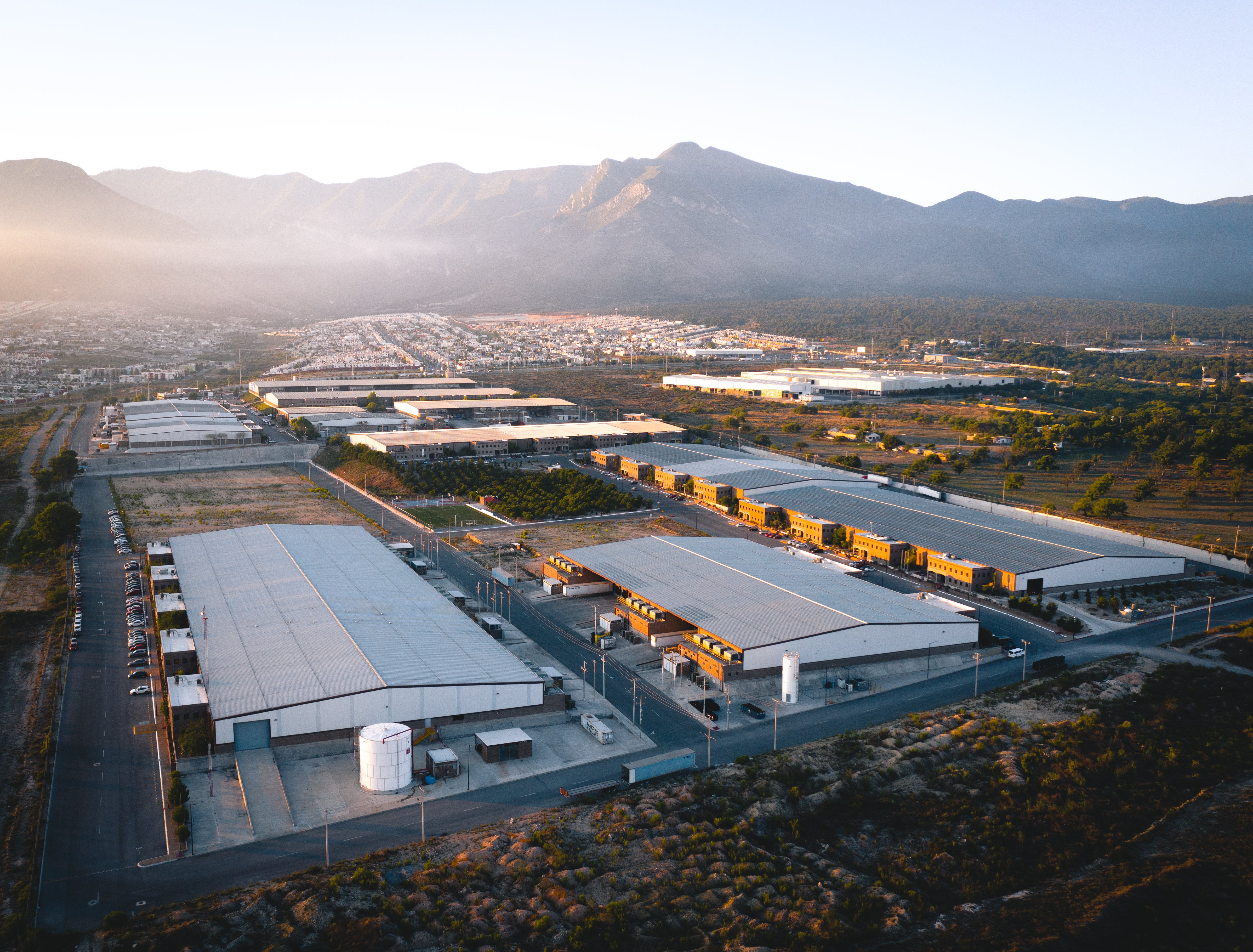
The manufacturing campus model represents what happens when an operator with decades of experience supporting hundreds of manufacturers consolidates industrial space, workforce management, logistics, and compliance under one operational platform. Rather than coordinating a landlord for the building, a shelter company for IMMEX, a staffing agency for recruiting, and a customs broker for imports, the campus integrates all four operational pillars under a single provider.
This is not a rebrand of traditional shelter. It is a structural evolution driven by a specific insight: the failure points in Mexico manufacturing are almost always at the seams between vendors. When one provider owns the building, employs the HR team, runs the customs operation, and manages compliance, those seams disappear. When your operation needs to scale, you grow within a campus network that already has the space, the permits, and the recruiting pipeline in place.
For manufacturers evaluating providers, the six types of shelter companies in Mexico differ significantly in scope. Understanding whether a provider offers administrative shelter, full-service coordination, or integrated campus operations determines what your day-to-day experience will actually look like.
Why Manufacturers with Thousands of Employees Still Choose Shelter
The most common misconception about the shelter model is that it has a natural expiration point. The logic goes: at some headcount threshold, the math tips in favor of standalone because you have enough scale to justify building everything internally.
That logic misses three compounding advantages that actually become stronger with scale, not weaker.
Economies of scale. A shelter operator managing thousands of employees across dozens of manufacturers delivers HR administration, regulatory compliance, and logistics support at a per-headcount cost that no single manufacturer can match internally. The fixed costs of compliance infrastructure, audit preparation teams, EHS specialists, and customs operations are distributed across a large client base. A standalone manufacturer of any size absorbs 100% of those fixed costs. There is also a workforce flexibility advantage: shelter operators can rebalance employees across clients when one manufacturer scales down and another scales up, reducing or eliminating the severance costs that standalone operations absorb during every headcount adjustment.
Economies of scope. The same team that handles your customs declarations also manages your EHS permits, your labor relations, your tax filings, and your facility maintenance. That integration eliminates the coordination overhead that standalone operations accept as the cost of doing business. When a customs issue has labor implications (and in Mexico, it often does), an integrated operator resolves it as one problem. A standalone operation routes it through three departments and two outside counsel.
Economies of learning. Supporting hundreds of manufacturers over 40 years generates institutional knowledge that cannot be replicated by any single company, regardless of how large its own Mexico operation becomes. Your standalone team will encounter a SAT audit, a labor dispute, or an IMMEX compliance question for the first time. The shelter operator has encountered and resolved each of these hundreds of times. That difference in pattern recognition translates directly into faster resolution, lower risk, and fewer production disruptions.
There is also a strategic argument that goes beyond efficiency. The shelter model creates a clean division of responsibilities: the manufacturer's team owns everything production-related (engineering, supply chain, quality, training, manufacturing technology, company culture), while the operator owns everything administrative (employer of record, recruiting, payroll, labor relations, customs, logistics, procurement, facilities, EHS, accounting, employee transportation). That split is what makes the focused-production advantage possible in the first place.
In industries where quality is non-negotiable, that division is not a convenience. It is a competitive advantage. Medical device, aerospace, and automotive Tier 1 manufacturers cannot afford plant leadership distracted by administrative firefighting. The shelter model removes that distraction by design.
Tetakawi currently supports 60-plus active manufacturers across five Manufacturing Campuses. Some have operated under this model since the late 1980s. Some employ thousands of workers. They do not stay because switching costs are high. They stay because the compounding returns from scale, scope, and learning continue to outweigh any theoretical benefit of going it alone.
When Going Standalone Is the Right Call
Credibility requires acknowledging that standalone is the better fit for some manufacturers in specific circumstances. There are legitimate reasons to build your own operation, and recognizing them is part of making a good decision.
Your customers or OEMs contractually require it. Some large automotive and aerospace OEMs have procurement policies that require Tier 1 suppliers to operate under their own legal entity in Mexico. If your largest customer's contract mandates a standalone Mexican subsidiary, that requirement may override every operational advantage shelter provides. This is more common in highly regulated supply chains where traceability and entity-level accountability are built into qualification standards.
Your corporate culture demands full ownership of every function. Some organizations operate with a principle that everything touching their business must be fully owned and internally controlled. If that extends to HR, accounting, customs, and facilities management, the shelter model will feel like a compromise regardless of the economics. That is a legitimate cultural decision. But verify that the preference is grounded in operational logic rather than unfamiliarity with how the shelter model actually works in practice.
No shelter provider operates where you need to be. Shelter services and manufacturing campuses are concentrated in specific regions of Mexico. If your supply chain, customer proximity, or industry cluster requires you to be in a location where no shelter provider has established operations, standalone may be your only path. Not every city in Mexico has the shelter infrastructure to support a foreign manufacturer.
You have already built the internal capability. Some manufacturers who have operated in Mexico for years have assembled strong internal teams across compliance, HR, customs, and facilities. If your organization has that depth of institutional knowledge and is genuinely staffed to manage all 15-plus operational functions at the level a dedicated operator provides, standalone can work well. The key word is genuinely. This is the condition manufacturers most often overestimate.
Some manufacturers start in shelter and transition to standalone after four or five years once they have built that internal capability. A good shelter partner supports that transition with a documented process and clear timelines. A great one delivers a level of operational integration that makes the transition a harder case to justify with each passing year.
A Framework for the Shelter vs. Standalone Decision
Rather than a cost spreadsheet, consider these five questions. They will tell you more about which model fits your operation than any fee comparison.
1. What do you want your plant manager spending their time on? If the answer is "production quality and output," the shelter model removes the administrative burden that competes for their attention. If your organization is comfortable with a plant manager who splits time between production oversight and Mexican regulatory administration, standalone can work.
2. Do you have the internal bandwidth to manage Mexican regulatory compliance at the level it now demands? With 3,000 SAT audits planned for 2026, an overhauled customs law, and evolving labor reforms, compliance is not a set-it-and-forget-it function. It requires dedicated, specialized staff who stay current on changes that happen multiple times per year.
3. What is the total cost of operations, not just the shelter fee versus your headcount? Include the cost of an in-house legal team, accounting firm, HR department, EHS staff, customs brokerage, and the management overhead of coordinating all of them. Then compare that total to the shelter or campus fee that covers everything under one line item. When Tetakawi builds cost models with prospective clients comparing both approaches, the shelter or campus model typically delivers around 30% savings on administrative overhead before factoring in time-to-value advantages.
4. What is your timeline? Entity formation, IMMEX certification, facility setup, and initial hiring for a standalone operation typically take 6 to 12 months. A traditional shelter arrangement can have you in production within 3 to 4 months, and a Manufacturing Campus with existing infrastructure can start up in as little as 30 days. For companies where speed to market matters, those gaps are significant.
5. What happens when something goes wrong? Your first customs hold, your first labor dispute, your first SAT audit request. In a standalone operation, you are learning on the job. Under a shelter with decades of operational history, these situations are resolved through established processes by teams that have handled them before. That difference in institutional response time can be the difference between a three-day production stoppage and a three-hour phone call.
If you are considering manufacturing in Mexico and want to seriously weigh the pros and cons of both approaches, we encourage you to explore the decision with real numbers. Tetakawi works with prospective manufacturers to build a shelter vs. standalone cost model specific to your operation, comparing administrative overhead, timeline to production, regulatory costs, and total cost of operations side by side. It is a straightforward way to see which model fits your situation before you commit to either path.
Frequently Asked Questions: Shelter vs. Standalone in Mexico
Is a shelter company in Mexico cheaper than going standalone?
When comparing total cost of operations rather than just the shelter fee, the shelter model is more cost-effective for most manufacturers. Standalone operations must account for entity formation, a dedicated HR department, in-house or contracted legal and accounting teams, EHS staff, customs brokerage, IVA certification management, and the overhead of coordinating all of them. A shelter or campus operator bundles these under a single fee structure. In Tetakawi's experience building cost models with prospective clients, the shelter or campus model typically delivers around 30% savings on administrative overhead, before accounting for the time-to-value advantage of getting into production months sooner. For operations with fewer than several hundred employees the cost advantage is particularly clear, though many manufacturers with much larger workforces find the total picture still favors shelter.
At what size should a manufacturer switch from shelter to standalone?
There is no headcount threshold where switching automatically makes sense. This is one of the most persistent misconceptions about the shelter model. Tetakawi supports manufacturers with thousands of employees who have operated under shelter for over three decades. They stay because economies of scale, scope, and learning continue to compound with size. The decision should be based on whether your organization has built the internal capability to manage Mexican regulatory compliance, labor relations, customs operations, and facility management at a level that matches what a dedicated operator provides, not on a specific employee count.
How long does it take to set up a standalone manufacturing operation in Mexico?
Setting up a standalone operation typically takes 6 to 12 months, including legal entity formation, RFC registration, IMMEX certification, facility acquisition, permits, and initial workforce recruitment. A traditional shelter arrangement can have a manufacturer in production within 3 to 4 months because the legal entity, IMMEX permit, and operational infrastructure already exist. A Manufacturing Campus with production-ready facilities and established workforce pipelines can start up in as little as 30 days. For companies where speed to market is a competitive factor, those timelines matter.
What are the biggest risks of standalone manufacturing in Mexico?
The primary risks are regulatory exposure and institutional knowledge gaps. Mexico's SAT plans 3,000 foreign trade audits in 2026 targeting IMMEX operations. More than 600 IMMEX permits were suspended in 2025 for compliance failures. A standalone manufacturer bears full liability for customs, tax, labor, and environmental compliance. Beyond financial penalties, a customs hold or IMMEX suspension can shut down production entirely. Manufacturers who have not yet built deep Mexican regulatory expertise are particularly exposed during the first several years of standalone operation.
What is the Manufacturing Campus Model?
The manufacturing campus model is a mode of operation where a single provider integrates all four pillars of a manufacturing operation, including industrial space, workforce management, logistics and customs, and compliance administration, under one operational platform. Unlike a traditional shelter arrangement where the manufacturer may still coordinate a separate landlord, staffing agency, and customs broker, a campus operator owns the facilities, employs the support teams, and manages all non-production functions directly. This eliminates vendor coordination overhead and creates a manufacturer community where tenants benefit from shared infrastructure, collective vendor scale, and the ability to grow in place across a campus network.
Can I transition from shelter to standalone later?
Yes. Many shelter agreements include provisions for transitioning to a standalone entity, and the typical timeline is 4 to 5 years from initial operations. A documented transition process should cover entity formation, IMMEX transfer or new application, employee migration, vendor contract transfers, and knowledge handover. The key consideration is whether your organization has built sufficient internal capability to manage all operational functions at the level the shelter was providing. Some manufacturers complete the transition successfully. Others evaluate the full cost and operational complexity of standalone and decide the shelter or campus model remains the better long-term fit.
Thinking about manufacturing in Mexico? Download this ebook to learn the difference between shelter services and standalone operations in Mexico.

Subscribe
Sign up and stay informed with tips, updates, and best practices for manufacturing in Mexico.