Mexico is the second-largest supplier of home appliances to the United States, with more than 500 manufacturers employing 64,000+ workers and exporting $9.5 billion to U.S. buyers in 2024. Behind those finished refrigerators, washing machines, and stoves is a supply chain that pulls in hundreds of component manufacturers: compressor plants, motor winding operations, plastic injection molders, metal stamping shops, control board assemblers, and wire harness producers. If your company makes parts that end up inside a home appliance, the largest concentration of your customers now operates in northern Mexico. This guide maps the industry so you can evaluate whether your operation should be closer to theirs.
Key Takeaway
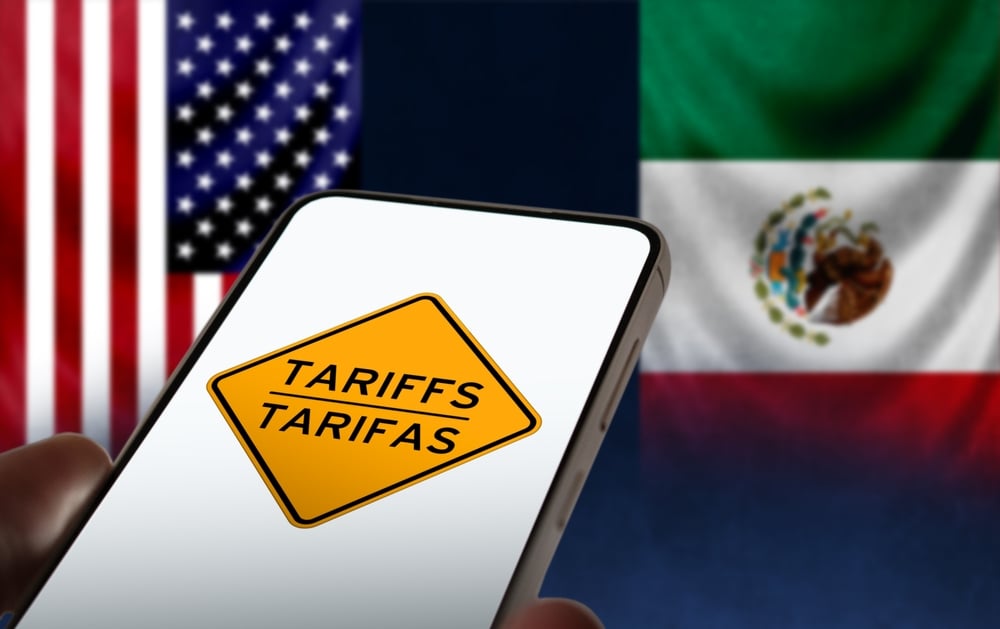
Mexico's appliance manufacturing sector comprises 500+ companies employing 64,000+ workers, with $9.5 billion in annual U.S. exports and more than $1 billion in new OEM investment commitments since 2023. The tariff landscape has shifted multiple times: the 25% IEEPA tariffs on Mexico were struck down by the Supreme Court in February 2026, replaced by a 10% Section 122 surcharge (the administration announced an increase to 15% but no formal proclamation has been issued; CBP is collecting at 10%) that exempts USMCA-qualifying goods. Section 232 tariffs (50% on steel and aluminum content) still apply to all imports regardless of origin. The net effect: USMCA qualification is now more valuable than ever. For Tier 2 and Tier 3 suppliers, regional origin reduces your OEM customers' total duty exposure, strengthens their USMCA qualification, and makes your parts a procurement advantage rather than a cost liability.
Mexico's Appliance Industry by the Numbers
Only China ships more home appliances to the United States than Mexico. In 2024, Mexican factories shipped $9.462 billion in appliances to U.S. buyers, capturing between 30% and 44% of total U.S. appliance imports, according to Mexico Business News trade data.
$9.5B
Appliance exports to U.S. (2024)
Mexico Business News trade data
500+
Appliance manufacturers in Mexico
Industry data
64,000+
Workers in appliance manufacturing
Industry data
$4.2B
Accumulated FDI (1999-2023)
Mexico FDI data
$1B+
New OEM investment since 2023
Mabe, Whirlpool, BSH, LG combined
How large is Mexico's appliance export market?
Total U.S. imports of home appliances from all countries reached $41.887 billion in 2024, up 6.3% year-over-year. Mexico's $9.5 billion share breaks down into two segments: major home appliances (refrigerators, washing machines, dryers, dishwashers, stoves) accounted for $7.857 billion, while small appliances (blenders, mixers, vacuum cleaners, humidifiers) contributed $1.605 billion.
The small appliance segment is the growth story. Small appliance exports climbed 9.3% year-over-year in 2024, while major appliance exports dipped 3.5%, reflecting both demand shifts and early tariff uncertainty affecting large-ticket purchases.
What drives the manufacturing base?
Three structural advantages have made Mexico the default production platform for appliances destined for the North American market. First, roughly 500 appliance manufacturing companies operate in Mexico, employing more than 64,000 workers in electronic appliance production alone. Second, accumulated foreign direct investment in the household appliance sector reached $4.22 billion between January 1999 and September 2023, with FDI surging to $505 million in 2023 alone. Third, the northern Mexico manufacturing corridor provides same-day logistics access to the U.S. market. A refrigerator assembled in Monterrey reaches a Dallas distribution center within 8-12 hours by truck. The same unit from Qingdao takes 25-30 days by sea.
That logistics advantage matters as much for the components going into appliances as for the finished goods coming out. A compressor manufacturer or a plastic housing supplier operating in the same corridor can deliver parts on a just-in-time basis, eliminating the 4-6 weeks of safety stock that ocean-sourced components require.
Who Manufactures Appliances in Mexico
Five multinational manufacturers and one Mexican-owned company anchor the country's appliance production base. Their combined investment commitments since 2023 exceed $1 billion. Understanding where these OEMs operate and what they produce is essential for any component supplier evaluating where to locate production.
| Manufacturer | Factory Locations | Key Products | Workforce | Recent Investment |
|---|---|---|---|---|
| Mabe | 15 factories: Mexico City, Coahuila, Guanajuato, Nuevo Leon, Queretaro, SLP, Durango, Jalisco, Puebla | Refrigerators, stoves, gas cooking, small appliances (GE, GE Profile, Monogram, ioMabe brands) | Not disclosed (3,500+ new jobs from expansion) | $668M (2025-2027); $1.1B total since 2023 |
| Whirlpool | Apodaca (NL), Celaya (GTO), Ramos Arizpe (Coah.) | Refrigerators, washing machines, stoves, compact appliances | ~10,500 | $250M expansion (2023-2025) |
| LG Electronics | Monterrey (NL), Reynosa (Tamps.), Mexicali (BC) | Refrigerators, scroll compressors, OLED TVs | ~6,700 direct | $100M Reynosa (2025); new compressor line Monterrey (2024) |
| BSH (Bosch/Thermador) | Monterrey (NL) | French Door refrigerators (Bosch, Thermador brands) | ~1,500 | $260M new factory (opened Jul 2024) |
| Samsung | Queretaro (Qro.), Tijuana (BC) | Refrigerators, washers, dryers (4M+ units/yr from Queretaro; 80% exported) | Undisclosed (cuts reported Mar 2025) | Future investments halted (under IEEPA tariffs, now struck down); evaluating dryer transfer to S. Carolina |
| Electrolux | Ciudad Juarez (Chih.) | Refrigerators, washers, dryers (Frigidaire, Kelvinator brands) | 3,000-4,800 | Established operations since 2000s |
What the investment patterns tell component suppliers
The table above is a customer map. If you manufacture components that end up inside appliances, these are the companies buying them. Three patterns in the data matter for your planning:
The committed buyers are expanding. Mabe announced $668 million for 15 factories across nine states between 2025 and 2027, according to Mexico Business News. Whirlpool committed $250 million, with $150 million going to its Ramos Arizpe, Coahuila facility, described as its most modern facility in Mexico. BSH (Bosch/Thermador) opened a $260 million refrigerator factory in Monterrey in July 2024, according to BusinessWire. LG brought compressor manufacturing in-house at Monterrey in January 2024 rather than importing from South Korea. That last move is the clearest signal for component suppliers: OEMs are actively nearshoring their supply chains, not just their assembly.
Whirlpool wants 80% regional sourcing. Whirlpool has set a target of 80% regional component integration, with 70% sourced directly from Mexico, according to Steel Orbis. That's a procurement directive. If you make stamped steel panels, injection-molded housings, wiring assemblies, or motors, and you're not in the USMCA zone, you're on the wrong side of that target.
Not everyone is doubling down — but the conditions have changed. Samsung halted future Mexico investments and cut approximately 30% of its Mexican workforce in early-to-mid 2025, in response to the 25% IEEPA tariffs on Mexico imports, according to TrendForce. LG announced plans for a new refrigerator assembly line at its Tennessee facility (completion anticipated Q3 2026), according to Assembly Magazine. An important caveat: both decisions were made when IEEPA tariffs were in effect. The Supreme Court struck down those tariffs in February 2026, and the replacement Section 122 surcharge (10%; the announced increase to 15% was never formally proclaimed) exempts USMCA-qualifying goods entirely. OEMs with significant non-USMCA content in their supply chains — components sourced from South Korea, China, and Southeast Asia — were hit hardest by the original tariff regime. Whether Samsung and LG adjust their Mexico strategies now that the tariff environment has shifted remains to be seen. Manufacturers with deeply integrated North American supply chains never faced the same pressure and are investing more. Both the pullback and the expansion are real, but the policy conditions behind the pullback have changed.
2023-2025: Whirlpool commits $250M
$150M to Ramos Arizpe (most modern facility in Mexico). Target: 80% regional component sourcing.
Jul 2024: BSH opens $260M refrigerator factory in Monterrey
New entrant to Mexico's appliance manufacturing base. French Door units for Bosch and Thermador.
Mar 2025: Mabe commits $668M (2025-2027)
Largest single appliance investment in Mexico. CEO states it proceeds "with and without tariffs."
Mar 2025: Samsung halts future Mexico investment, cuts 30% workforce
Decision made under IEEPA 25% tariffs (struck down Feb 2026). Evaluating dryer transfer to South Carolina.
Q3 2026: LG Tennessee expansion completion targeted
560,000 sq ft + new refrigerator assembly line. Announced under IEEPA tariffs (now struck down). LG retains four Mexico plants.
For component suppliers, the net signal is clear: over $1 billion in OEM expansion means more production lines, more assembly capacity, and more purchased components. The manufacturers staying and investing are the ones whose supply chains run deepest in Mexico.
Where Appliance Factories Are Located
Appliance manufacturing in Mexico is concentrated in seven states. For component suppliers, understanding these clusters is a site selection exercise: proximity to your customers determines delivery speed, logistics cost, and whether your parts count as USMCA-originating content.
| State / Corridor | Key Manufacturers | Primary Products | Why It Matters for Suppliers |
|---|---|---|---|
| Nuevo Leon | Whirlpool (Apodaca), LG (Monterrey), BSH (Monterrey — $260M new plant) | Refrigerators, washing machines, compressors | Deepest OEM concentration; mature supplier ecosystem; higher labor costs due to saturation |
| Coahuila (Saltillo-Ramos Arizpe) | Whirlpool (Ramos Arizpe — $150M expansion, most modern facility in Mexico) | Side-by-side refrigerators for all Americas | 15-20% lower wages; automotive crossover; available real estate; <4 hrs to Laredo |
| Chihuahua | Electrolux (Ciudad Juarez — 3,000-4,800 workers) | Refrigerators, washers, dryers | Established border corridor; deep electronics/medical manufacturing ecosystem |
| Guanajuato | Whirlpool (Celaya), Mabe (Celaya) | Stoves, compact refrigerators, semi-auto washers | Central Bajio location; automotive supply chain crossover |
| Tamaulipas | LG (Reynosa — $100M expansion) | OLED TVs, electronics | LG's longest-running Mexico operation (since 1974); direct Texas border |
| Queretaro | Samsung (4M+ units/yr), Mabe | Refrigerators, washers/dryers | Samsung's primary appliance hub (future investment halted under IEEPA tariffs, now struck down) |
| Baja California | Samsung (Tijuana), LG (Mexicali) | Refrigerators, washers, dryers, electronics | Border corridor with strong electronics workforce; proximity to California ports |
The Nuevo Leon-Coahuila corridor
Nuevo Leon accounts for a significant share of Mexico's appliance production. Monterrey and its surrounding municipalities host Whirlpool's Apodaca complex, LG's refrigerator and compressor plants, and a mature supplier ecosystem. The concentration reflects decades of investment in precision assembly, electronics workforce development, and logistics infrastructure connecting to the Laredo crossing, the busiest commercial land port in the Western Hemisphere.
But density comes with cost pressure. Decades of manufacturing saturation in the Monterrey metro area have pushed wages higher and tightened the available labor pool. That's one reason Whirlpool chose Ramos Arizpe, Coahuila for its most modern facility in Mexico and directed $150 million of its $250 million expansion there rather than to Monterrey.
Saltillo-Ramos Arizpe: The emerging corridor for component suppliers
The Saltillo-Ramos Arizpe corridor in Coahuila is where the math works best for mid-sized component suppliers entering the appliance manufacturing supply chain. Wages run 15-20% lower than Monterrey. Available industrial real estate is more accessible. And the state's automotive manufacturing infrastructure (GM, Stellantis, and their supply chains) has built a workforce with the precision metalworking, plastics, and assembly capabilities that appliance component production requires.
The strategic advantage is dual-industry access. A metal stamping or injection molding operation in the Saltillo corridor can serve appliance OEMs in Ramos Arizpe and Monterrey while also supplying automotive manufacturers. That customer diversification reduces concentration risk, and the corridor's established manufacturing communities allow new operations to launch in 30-60 days rather than the 8-12 months a standalone setup requires. Saltillo connects to the Laredo crossing in under 4 hours, providing the same logistics access as Monterrey at meaningfully lower operating cost.
The Appliance Supply Chain: Where Component Suppliers Fit
A finished home appliance is an assembly of dozens of sourced components. The major OEMs profiled above are the final assemblers, but the products they ship depend on a supply chain of specialized manufacturers. Understanding where your product category fits in that chain determines how the tariff and USMCA dynamics affect your business.
What components go into home appliances?
The U.S. appliance manufacturing industry spends roughly 45-50% of revenue on purchased inputs. Those inputs fall into identifiable categories that map directly to Tier 2 and Tier 3 supplier operations:
- Steel and metal components
- Cabinets, frames, drums, panels, brackets, and fasteners. Steel rolling, drawing, and metal stamping operations supply the structural backbone of every major appliance. A washing machine drum, a refrigerator shell, a stove frame all begin as flat-rolled steel processed through high-speed stamping presses.
- Plastic parts and housings
- Interior liners, door components, control panel housings, fan shrouds, and insulation components. Plastic pipe and parts manufacturing, laminated plastics, and polystyrene foam operations are primary suppliers. Injection molding, thermoforming, and foam-in-place insulation processes are core capabilities.
- Electrical components
- Motors, compressors, heating elements, thermostats, control boards, sensors, and wiring harnesses. Electrical equipment manufacturing and motor winding operations feed directly into appliance assembly lines. LG's decision to produce compressors in Monterrey rather than import them reflects the strategic importance of this category.
- Rubber and polymer components
- Door seals, gaskets, hoses, belts, vibration dampeners, and grommets. Hose and belt manufacturing operations supply components that appear in every appliance category from washers to dishwashers to refrigerators.
SUPPLY CHAIN INSIGHT
When an OEM like Whirlpool or Mabe expands production capacity in Mexico, they don't just need more assembly workers. They need more stamped steel panels, more injection-molded liners, more motors, more wiring harnesses, and more packaging. Every $100 million in OEM expansion creates proportional demand through the supply chain. With over $1 billion in combined OEM investment commitments since 2023, the pull-through demand for component suppliers is substantial.
Why does proximity matter more now?
Two forces have made supply chain proximity the critical variable it wasn't five years ago. The first is the tariff environment. USMCA qualification now determines not only whether products receive preferential customs treatment, but also whether they are exempt from the 10% Section 122 surcharge (in effect since February 2026; the announced increase to 15% was never formally proclaimed). Section 232 tariffs apply to steel and aluminum content in all appliance imports regardless. Every component sourced from outside the USMCA zone counts against the finished product's Regional Value Content. An OEM importing compressors from South Korea, control boards from China, and motors from Southeast Asia risks pushing their finished appliance below the 50% RVC threshold and losing preferential treatment — plus triggering the Section 122 surcharge. That OEM has a direct financial incentive to source those same components from within the USMCA zone.
The second force is the post-2020 supply chain reality. Appliance manufacturers learned during pandemic-era disruptions that a 25-day ocean transit for critical components was a business risk. A compressor shortage from an overseas supplier doesn't just delay one product line. It idles an entire assembly plant. Regional sourcing eliminates that exposure.
Tariffs and USMCA: The Cost Equation for Component Suppliers
The tariff landscape for appliance imports into the United States has shifted significantly since early 2025. Three separate policy actions now define the cost equation, and understanding how they interact — and which ones are still in effect — is essential for any sourcing or investment decision.
What happened: IEEPA tariffs imposed, then struck down
In early 2025, the administration imposed 25% tariffs on imports from Mexico and Canada under the International Emergency Economic Powers Act (IEEPA). These tariffs were the catalyst for several high-profile announcements — including Samsung's investment freeze and workforce cuts, and LG's decision to add refrigerator assembly capacity in Tennessee. However, on February 20, 2026, the U.S. Supreme Court ruled in Learning Resources v. Trump that the IEEPA tariffs exceeded presidential authority. The 25% IEEPA tariffs on Mexico and Canada are no longer in effect. The decisions that Samsung, LG, and others made under those tariff conditions were made under a policy regime that has since been invalidated.
What replaced it: Section 122 surcharge (USMCA-qualifying goods exempt)
On February 24, 2026, a 10% import surcharge on goods from Mexico and Canada took effect under Section 122 of the Trade Act of 1974. (The administration announced an increase to 15%, the statutory maximum, but no formal proclamation has been issued; CBP is collecting at 10%.) This replaced the struck-down IEEPA tariffs at a significantly lower rate. The critical distinction: goods that qualify under USMCA are exempt from the Section 122 surcharge. This makes USMCA qualification more valuable than it was under the previous tariff regime. Non-qualifying goods from Mexico face the 10% surcharge on top of any applicable MFN duties and Section 232 exposure. The Section 122 surcharge is authorized for a maximum of 150 days, expiring approximately July 24, 2026, unless renewed through separate legislative action.
What remains: Section 232 on steel and aluminum (applies to all imports)
On June 23, 2025, Presidential Proclamation 10947 expanded Section 232 tariffs to cover steel-based household appliances, including washing machines, dishwashers, stoves, ovens, refrigerators, dryers, freezers, and food waste disposals. The tariff rate is 50%, applied to the declared steel and aluminum content value of these products. If the steel content value is unknown, CBP may assess the duty on the full entered value of the article.
This is a critical point: Section 232 tariffs apply to imports from all countries, including Mexico and Canada, regardless of USMCA qualification status. These tariffs operate under a national security authority separate from trade agreements and separate from the Section 122 surcharge. A USMCA-qualifying appliance from Mexico is exempt from the Section 122 surcharge but still faces Section 232 duties on its steel and aluminum content. The tariff added approximately $300 million to Whirlpool's costs in 2025 alone, according to the company's earnings disclosures, and Whirlpool sources 96% of its steel domestically.
$300M
What Section 232 steel and aluminum tariffs added to Whirlpool's costs in 2025 alone, despite Whirlpool sourcing 96% of its steel domestically. Every appliance manufacturer faces this exposure regardless of origin.
The current cost equation (March 2026)
USMCA qualification now carries more weight than at any point since the agreement took effect. Appliances that meet the Regional Value Content (RVC) threshold — typically 50% under the net cost method or 60% under the transaction value method — qualify for preferential tariff treatment on the standard customs duty line and are exempt from the Section 122 surcharge. The only remaining tariff exposure for a USMCA-qualifying appliance from Mexico is Section 232 on its steel and aluminum content.
Non-qualifying goods face a steeper path: the standard MFN duty rate, plus the 10% Section 122 surcharge (through approximately July 2026), plus Section 232 on metal content. The gap between qualifying and non-qualifying has widened. A deeply integrated North American supply chain delivers the lowest total landed cost. A supply chain relying heavily on non-USMCA components faces compounding duties across multiple regimes.
Why this matters for component suppliers
The RVC calculation is where component suppliers enter the equation. The steel cabinet stamped in Monterrey counts toward the 50% threshold. The compressor manufactured in Nuevo Leon counts. The control board imported from Shenzhen does not. For OEMs operating near the qualification line, a single sourcing decision on a high-value component can determine whether the entire finished appliance qualifies for USMCA preferential treatment — and with it, exemption from the Section 122 surcharge.
USMCA-Qualifying (from Mexico)
- Preferential duty rate on standard customs line
- Exempt from Section 122 surcharge (10%)
- Section 232 applies only to steel/aluminum content value
- Component value counts toward OEM's 50% RVC threshold
Non-Qualifying (from Mexico)
- Standard MFN duty rate on customs line
- Subject to 10% Section 122 surcharge (through ~July 2026)
- Section 232 applies to steel/aluminum content value
- Non-USMCA components count against OEM's RVC threshold
Across Tetakawi's current export-oriented manufacturing clients, 85% of products qualify under USMCA. For companies with significant Asian-sourced components, qualification requires BOM-level analysis and sourcing adjustments. An OEM evaluating two bids for the same component will increasingly weigh USMCA origin as a procurement criterion alongside price and quality. A supplier whose parts strengthen the OEM's USMCA position offers a cost advantage that goes well beyond the component price itself.
For a detailed breakdown of the current tariff landscape, including Section 232 and trade remedy interactions, see the Mexico Tariffs 2026 guide. For USMCA qualification mechanics, including both the transaction value and net cost methods, see the USMCA 2026 Review.
Tariff rates, USMCA thresholds, and duty calculations vary by product, HTS classification, and origin. The tariff landscape has changed multiple times in 2025 and 2026, and may change again. The information in this guide reflects conditions as of March 2026. Manufacturers should consult with a licensed customs broker or trade attorney for entry preparation and duty calculations specific to their products.
How Component Suppliers Enter the Market
Suppliers entering Mexico to serve appliance OEMs have three operating models. The right choice depends on the scale of your operation and how fast you need to be producing near your customers.
Manufacturing Campus model
Under a shelter arrangement, a manufacturer operates within an established manufacturing community that provides the facility, workforce recruitment, payroll administration, regulatory compliance, customs support, and supply chain infrastructure. The shelter provider holds the IMMEX registration and assumes legal and fiscal responsibility. The manufacturer retains full control of production, quality, and intellectual property. Typical launch timeline: 30-60 days from decision to production.
This model is particularly relevant for component suppliers entering Mexico to serve appliance OEMs. It provides immediate access to established supplier ecosystems and skilled labor pools without requiring a 6-12 month setup period. A compressor manufacturer or a metal stamping operation can be delivering parts to a Whirlpool or Mabe plant within weeks of the decision to move, not months. Tetakawi operates manufacturing communities in the Saltillo-Ramos Arizpe corridor and other northern Mexico locations, with IMMEX program infrastructure already in place and proximity to the OEMs expanding in Coahuila and Nuevo Leon.
Standalone entity
The manufacturer establishes its own Mexican legal entity, secures facilities, builds out infrastructure, and manages all operational functions directly. This offers maximum control and is the model used by Whirlpool, LG, and Samsung for their large-scale operations. Typical timeline: 8-12 months from decision to production, with significant upfront capital.
Contract manufacturing
A third-party manufacturer produces to the contracting company's specifications. This minimizes capital investment but reduces control over quality, IP, and production scheduling. Less common for precision components where quality tolerances are tight and intellectual property protection matters.
For a complete comparison of operating structures, see our step-by-step guide to setting up manufacturing in Mexico. For deeper detail on how the shelter model works, including IMMEX benefits and compliance infrastructure, see the shelter services guide.
The Bottom Line
Mexico's appliance manufacturing sector is built on $4.2 billion in accumulated investment, 500+ companies, 64,000+ skilled workers, and same-day logistics to the U.S. market. The tariff environment has been volatile — the IEEPA tariffs that triggered Samsung's and LG's pullback decisions in 2025 were struck down by the Supreme Court in February 2026, and the replacement Section 122 surcharge exempts USMCA-qualifying goods. Section 232 tariffs on steel and aluminum content remain in effect for all imports regardless of origin. The net result: USMCA qualification is the single most important variable in the cost equation, and manufacturers with deeply integrated North American supply chains carry the lowest total landed cost.
For component suppliers, three things matter. First, your USMCA-zone origin is now a selling point — and a more valuable one than it was a year ago, because qualification now means exemption from the Section 122 surcharge in addition to preferential customs treatment. OEMs aren't just buying components; they're buying qualification percentage points. Second, the $1 billion+ in OEM expansion is creating demand for regionally sourced parts that compounds as each new production line comes online. Third, the companies that establish USMCA-qualifying production before competitors lock in a structural cost advantage.
Some product lines moved to the U.S. when the tariff math pointed that direction, and those decisions may or may not reverse now that the policy conditions have changed. The tariff landscape will continue to shift, and any evaluation should account for that uncertainty. But the net direction is clear: over $1 billion in new OEM investment, growing demand for USMCA-qualifying components, and a cost equation that increasingly rewards regional supply chains. The question for suppliers is whether your operation is positioned close enough to capture the demand, and whether your parts count toward or against your customers' USMCA qualification. The Saltillo-Ramos Arizpe corridor offers a practical starting point: proximity to major OEM facilities, lower operating costs than saturated metro areas, and established infrastructure that allows new operations to launch in weeks through a shelter arrangement.
Supplying the appliance industry from Mexico?
If you manufacture components that end up inside home appliances and you're evaluating production in Mexico, Tetakawi can help you get operational in the Saltillo-Ramos Arizpe corridor in as little as 30 days. Talk to our team about site selection, USMCA qualification strategy, and total landed cost analysis.
Talk to Our TeamFrequently Asked Questions
Which companies manufacture appliances in Mexico?
The major manufacturers operating appliance factories in Mexico include Whirlpool (three production complexes in Apodaca, Celaya, and Ramos Arizpe with approximately 10,500 workers), LG Electronics (four plants in Monterrey, Reynosa, and Mexicali with 6,700 direct employees), Mabe (15 factories across nine states producing for GE, GE Profile, and Monogram brands), Samsung Electronics (plants in Tijuana and Queretaro producing 4 million+ units annually, though future investment was halted in 2025 under IEEPA tariffs that have since been struck down), BSH (Bosch/Thermador, $260 million refrigerator factory opened in Monterrey in 2024), and Electrolux (Ciudad Juarez). Together, approximately 500 appliance manufacturing companies operate in Mexico, employing more than 64,000 workers in electronic appliance production.
How much does Mexico export in home appliances to the United States?
Mexico exported $9.462 billion in home appliances to the United States in 2024, making it the second-largest appliance supplier after China ($18.547 billion), according to Mexico Business News trade data. Mexico supplies between 30% and 44% of total U.S. home appliance imports. Major appliances accounted for $7.857 billion, while small appliances contributed $1.605 billion, with small appliances growing 9.3% year-over-year.
How do tariffs affect appliance manufacturing in Mexico in 2026?
The tariff landscape has changed multiple times since early 2025. The 25% IEEPA tariffs imposed on Mexico in early 2025 were struck down by the Supreme Court in February 2026 (Learning Resources v. Trump). They were replaced by a 10% Section 122 surcharge effective February 24, 2026 (the administration announced an increase to 15% but it was never formally proclaimed; CBP collects at 10%), and USMCA-qualifying goods are exempt from this surcharge. Separately, Section 232 tariffs (50% on steel and aluminum content) were expanded to cover household appliances in June 2025 and apply to all imports regardless of origin or USMCA status. Section 232 alone added approximately $300 million to Whirlpool's costs in 2025. For USMCA-qualifying appliances from Mexico, the primary remaining tariff exposure is Section 232 on steel and aluminum content. Manufacturers should consult a licensed customs broker for product-specific duty calculations, as the policy environment continues to evolve.
Is appliance manufacturing moving out of Mexico?
The evidence is mixed but tilts toward continued investment. Samsung halted future Mexico investments and cut approximately 30% of its workforce, and LG announced a new refrigerator assembly line at its Tennessee facility (completion anticipated Q3 2026). Both decisions were made in early-to-mid 2025 when 25% IEEPA tariffs on Mexico were in effect; those tariffs were struck down by the Supreme Court in February 2026. However, Mabe committed $668 million to expand 15 Mexican factories through 2027, Whirlpool completed a $250 million expansion including $150 million to its Ramos Arizpe facility, BSH opened a $260 million refrigerator factory in Monterrey, and LG invested $100 million to double Reynosa capacity. Total new investment commitments exceed $1 billion since 2023. The companies expanding most aggressively are those with deeply integrated North American supply chains and strong USMCA qualification rates.
Where are the main appliance manufacturing clusters in Mexico?
The Nuevo Leon-Coahuila corridor is the dominant region, with facilities including Whirlpool's Apodaca complex, LG's Monterrey plants, and Whirlpool's most modern facility in Ramos Arizpe, Coahuila (which received $150 million in expansion investment). The Saltillo-Ramos Arizpe corridor offers 15-20% lower wages than Monterrey with strong automotive supply chain crossover. Other clusters include Ciudad Juarez (Chihuahua), Celaya (Guanajuato), Reynosa (Tamaulipas), Tijuana and Mexicali (Baja California), and Queretaro.
What is the USMCA qualification requirement for appliances?
USMCA requires a 50% Regional Value Content (RVC) under the net cost method (or 60% under the transaction value method) for electrical appliances to qualify for preferential tariff treatment on the standard customs duty line. At least 50% of the product's value must originate from materials and processing within the United States, Mexico, or Canada. Components sourced from non-USMCA countries count against this threshold. As of March 2026, USMCA qualification also means exemption from the 10% Section 122 surcharge on Mexico imports, making qualification more valuable than it was under the previous tariff regime. Note that USMCA qualification is separate from Section 232 tariffs, which apply to steel and aluminum content regardless of origin. Qualification rates vary by product line, HTS classification, and component sourcing strategy.
Thinking about manufacturing in Mexico? Download this ebook and start moving your due diligence forward.

Subscribe
Sign up and stay informed with tips, updates, and best practices for manufacturing in Mexico.