
If you run a contract manufacturing business in the United States or Canada, you have likely experienced a noticeable shift over the past several years:
· Inbound inquiries tied to “China reduction” have increased.
· Sourcing teams are revisiting programs that have been offshore for a decade or more.
· Customers are asking more pointed questions about geographic risk, supply continuity, and proximity to North American demand.
At the same time, many contract manufacturers are finding that increased interest does not automatically translate into increased awards.
There are more conversations.
More quoting activity.
More executive-level discussions.
But the number of programs that actually move is smaller than the number that are evaluated.
That gap deserves a precise explanation.
It is not a marketing issue.
It is not a capability issue.
It is not a sudden change in competitiveness.
It is a structural mismatch between what buyers now require and what a purely U.S./Canada footprint can consistently deliver.
And that is exactly why contract manufacturers have the most to gain from adding Mexico capacity in a disciplined way.
What Buyers Are Actually Trying to Solve
To understand the opportunity, it helps to separate rhetoric from operational reality.
When buyers say they want to “move out of China” or “nearshore,” that statement contains several layers.
Very few brands are attempting to rebuild vertically integrated manufacturing models. Over the past 20–30 years, many deliberately moved away from owning factory operations. They optimized around:
- product development and brand strategy
- supplier governance and quality oversight
- capital-light balance sheets
- predictable operating models
That architecture is not easily reversed.
So when executive teams discuss diversifying away from China, they are not typically planning to build and run new factories themselves.
They are looking for suppliers who can deliver:
- reduced geographic concentration
- shorter supply chains
- improved responsiveness
- competitive economics
- and continued outsourced responsibility
That last point is critical.
Most brands still want someone else to own labor management, facility operations, environmental compliance, and day-to-day manufacturing risk.
So the demand entering your pipeline is not generic.
It is highly specific:
“We want nearshore outcomes, but we do not want to vertically integrate.”
That reality positions contract manufacturers at the center of this shift.
But it also introduces constraints.
Why Increased Demand Does Not Automatically Convert
When programs are evaluated for relocation or diversification, they typically fail at one of two decision gates.
Decision Gate One: Economics
China remains highly competitive in many categories.
Not because of a single cost variable, but because of ecosystem density and maturity:
- integrated supplier networks
- embedded tooling ecosystems
- scale efficiencies
- long-established export infrastructure
Mexico does not automatically beat China on unit price.
And it does not need to.
The actual comparison most buyers run is broader than unit price alone.
They look at:
- total landed cost
- transit time and variability
- inventory buffer requirements
- working capital exposure
- responsiveness to demand changes
- risk-adjusted supply continuity
The question becomes:
“Is the nearshore option economically close enough, once we consider all operational variables, to justify the move?”
If the gap is too wide, even leadership-level intent will not override the math.
Deeper Dive: Mexico is Not China – And That’s a Good Thing
Decision Gate Two: Ramp Confidence
Even when economics are workable, buyers scrutinize ramp risk.
This is where U.S./Canada contract manufacturers often face quite skepticism.
Labor markets in many regions remain tight. Skilled operators, technicians, and supervisors are not infinitely available. Hiring speed and retention stability vary by geography and industry.
Buyers know that a failed ramp eliminates theoretical savings.
They ask themselves:
- Can this supplier hire fast enough?
- Will training quality hold under pressure?
- Is supervisory bandwidth sufficient?
- Will existing customers be disrupted?
Even if your track record is strong, perceived labor tightness can introduce hesitation.
When economics are tight and ramp risk feels elevated, buyers often default to status quo, even if they would prefer geographic diversification.
That is where Mexico becomes strategically relevant.
Read More: The 2026 Nearshoring Reality: If Labor Is Your Constraint, You Can’t Ignore Mexico
Mexico’s Role in Solving the Two Constraints
Mexico’s value for contract manufacturers lies in its ability to change two variables simultaneously:
- Labor scalability
- Labor economics
Labor Scalability
Certain regions of Mexico maintain deeper manufacturing labor pools relative to comparable U.S. labor markets. Demographics, industrial clustering, and labor participation patterns create environments where ramping headcount is structurally more feasible.
For contract manufacturers competing for labor-intensive work, this matters.
A buyer evaluating a program transfer wants credible ramp timing. If Mexico improves your ability to demonstrate scalable hiring and training capacity, it directly addresses Decision Gate Two.
Labor Economics
Mexico is not universally cheaper than China.
However, for many labor-heavy routings, Mexico can provide a cost envelope that is meaningfully more competitive than U.S./Canada operations.
When evaluated against total landed cost, including freight time, inventory exposure, and variability, Mexico can often become economically viable for programs that cannot close domestically.
That changes Decision Gate One.
The key is not “Mexico beats China everywhere.”
The key is:
Mexico can make nearshoring economically executable for a subset of programs that currently stall.
Read More: Manufacturing Wages in Mexico: 2025–2026 Executive Benchmark Guide
USMCA and Cost Predictability
Trade frameworks matter less in headlines than in spreadsheets.
Under USMCA, many products can qualify for preferential treatment when properly structured and documented. In practical operating experience, a significant majority of export programs can meet qualification requirements.
In Tetakawi’s experience, approximately 85% of client exports qualify under USMCA provisions.
That does not eliminate compliance complexity.
It does improve cost predictability.
For a contract manufacturer building a cross-border model, predictability is more important than theoretical tariff elimination.
Predictability supports quoting confidence.
The Institutional Fit Opportunity
Mexico has capable manufacturers and contract manufacturers across numerous sectors.
The opportunity for U.S./Canada contract manufacturers is not based on an absence of capability.
It is based on institutional alignment.
Buyers relocating programs often seek suppliers that combine:
- documented governance
- mature quality systems
- structured program management
- continuity planning
- financial transparency
- predictable communication cadence
In many categories, they encounter two ends of a spectrum:
Large multinational suppliers with scale and infrastructure, but sometimes less flexibility for mid-market programs.
Smaller local firms with technical capability, but sometimes less visible governance depth for complex transfers.
A disciplined North American contract manufacturer expanding into Mexico can combine:
- established governance and documentation discipline
- recognized quality frameworks
- North American commercial oversight
- Mexico labor scalability
That hybrid profile is valuable.
And it is relatively scarce.
Capacity Extension, Not Relocation
The most successful Mexico expansions for contract manufacturers typically follow a focused pattern.
They do not involve the complete relocation of domestic operations.
Instead, they involve segmentation.
Domestic facilities retain:
- engineering leadership
- customer interface
- quality system ownership
- commercial management
Mexico facilities take on:
- labor-intensive routings
- stable, repeatable work
- programs where the cost envelope determines the award
This structure allows you to:
- protect institutional strengths
- increase competitiveness
- expand addressable opportunity
- reduce dependency on a single labor market
Mexico becomes an extension of capability, not a reinvention of the company.
Cost Realism and Credibility
It is essential to remain clear-eyed.
Mexico will not win every program.
China retains deep structural advantages in certain product categories, particularly those tightly integrated into dense supply ecosystems.
The strategic objective is not to displace all offshore manufacturing.
It is to win more of the programs that are currently being evaluated for diversification.
That is a narrower, but meaningful, target.
For contract manufacturers already seeing increased inbound interest, the opportunity is measurable:
- How many programs stalled on cost?
- How many stalled on ramp risk?
- How many could have been competitive with a different labor envelope?
If that number is non-trivial, the case for adding Mexico capacity strengthens.
Execution Discipline Determines Outcome
The barrier to Mexico expansion is rarely strategic logic.
It is execution risk.
Launching a stable operation in Mexico requires coordinated management of:
· Labor compliance and workforce administration
· Payroll and statutory benefits
· Import/export systems and IMMEX
· Customs documentation and audit readiness
· Environmental, health, and safety compliance
· Industrial facilities and infrastructure
· Fiscal controls and regulatory coordination
Each of these areas is manageable.
The risk emerges when they are managed separately.
Fragmented vendor coordination increases complexity, lengthens timelines, and introduces operational exposure, particularly for contract manufacturers who cannot afford disruption to existing customers.
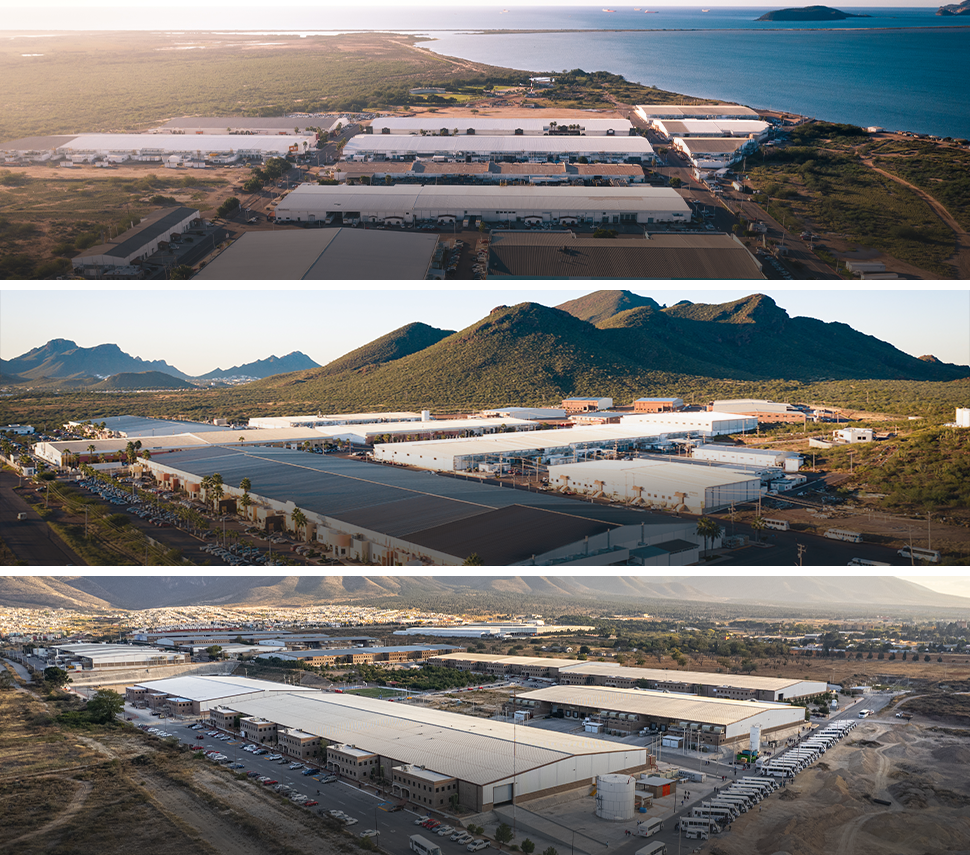
This is where Tetakawi’s Manufacturing Campus model becomes relevant.
Tetakawi was built specifically to support manufacturers establishing and operating their own facilities in Mexico within an integrated operating environment.
Inside a Tetakawi Manufacturing Campus, manufacturers maintain full control over:
· Production processes
· Quality systems
· Operational leadership
· Customer relationships
At the same time, they leverage established infrastructure that includes:
· Industrial facilities
· Workforce recruitment pipelines
· HR and labor compliance administration
· Import/export and customs coordination
· Environmental and regulatory support
The manufacturer runs the factory.
Tetakawi supports the operating environment.
For contract manufacturers entering Mexico for the first time, this structure materially reduces administrative burden and ramp uncertainty,without sacrificing operational control.
That difference is significant.
Because for contract manufacturers, execution stability is not optional.
It is the business model.
For a detailed breakdown of how this model works, see our complete guide to shelter services in Mexico.
Final Perspective
The sourcing environment is evolving, but it is not chaotic.
Some work will remain in Asia.
Some will reshore domestically.
Some will move to Mexico.
The question is not whether Mexico replaces China.
The question is whether your current footprint allows you to win the programs already entering your pipeline.
If inbound demand tied to diversification is rising but conversion remains uneven, that is a structural signal.
Mexico is not a headline response.
For many contract manufacturers, it is a competitive adjustment.
It expands the range of programs you can pursue.
It improves ramp confidence.
It strengthens cost positioning.
It increases geographic flexibility.
And when executed within a structured operating model, it does so without destabilizing your core operations.
For a full overview of costs, entry models, and trade frameworks, see our guide to
manufacturing in Mexico.
Whether Mexico expansion becomes a near-term initiative or remains an exploratory discussion, clarity matters.
Tetakawi works with manufacturers at both stages:
· Companies preparing to establish production capacity in Mexico
· And companies evaluating whether the economics and execution case justify moving forward
If you are assessing whether Mexico could improve close rates, expand competitive positioning, or provide scalable labor capacity under your governance, a structured evaluation is the logical next step. Contact us today to get started.

If labor is limiting your ability to ship, scale, or staff future capacity, this report helps you evaluate Mexico through the lens that actually determines feasibility

.jpg)